Disclosure: If you click any of our affiliate links and make a purchase, we will earn a commission (at no extra cost to you).
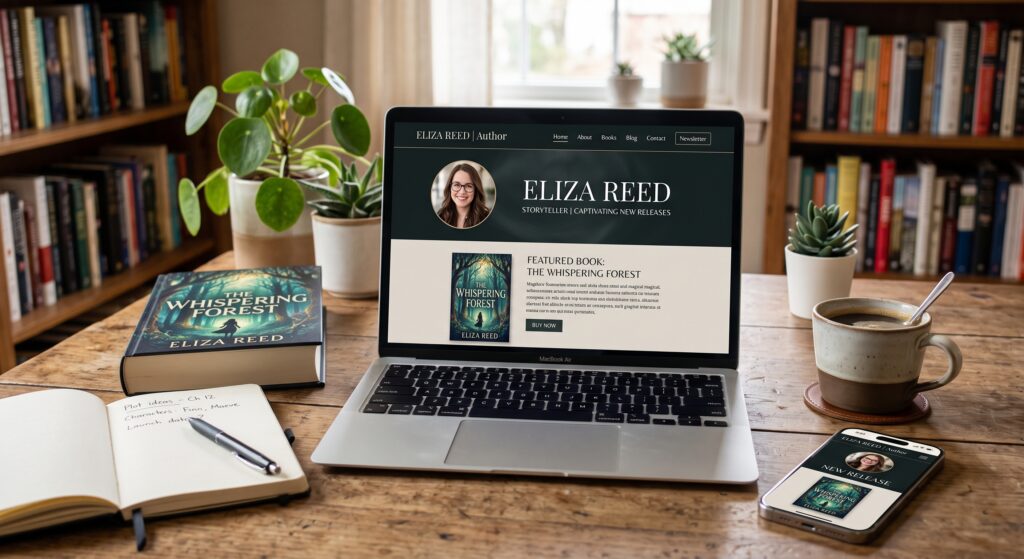
Your author website should be more than an online business card. It should be the home base for your author platform.
If we are serious about building an author career, our website deserves more attention than a digital business card.
Social media can help us discover readers. Amazon can help us sell books. Bookstores can help readers discover our work. But our author website gives us something those platforms do not: a piece of online real estate that we control.
At TrailHawk Publishing, we see an author website as the home base for an author’s platform. It can introduce readers to our books, collect email subscribers, showcase our work, provide a place for media or event inquiries, and give readers a reliable way to find us outside of social media.
And in 2026, having a website is not enough. We need one that is useful, trustworthy, easy to navigate, mobile-friendly, accessible, and built with search engines and real people in mind. Google continues to emphasize helpful, original, well-organized content, descriptive titles, logical site organization, and pages that work well across devices.
So what should an author website actually include?
1. A Clear Author Homepage
When someone lands on our website, they should understand who we are and what we write within seconds. That does not mean we need a complicated homepage filled with animations and twelve different calls to action.
We need clarity.
Our homepage should communicate our author identity, genre or area of expertise, and most important current offering. That might be our newest book, a bestselling title, a series, a newsletter, or a free resource. A visitor should not have to hunt through three menus to figure out whether we write romance, children’s books, fantasy, nonfiction, poetry, or something else entirely.
At TrailHawk Publishing, we use our own website to make the publishing brand and our authors easy to discover. Our current author page, for example, gives visitors a direct path toward learning about the writers behind our books.
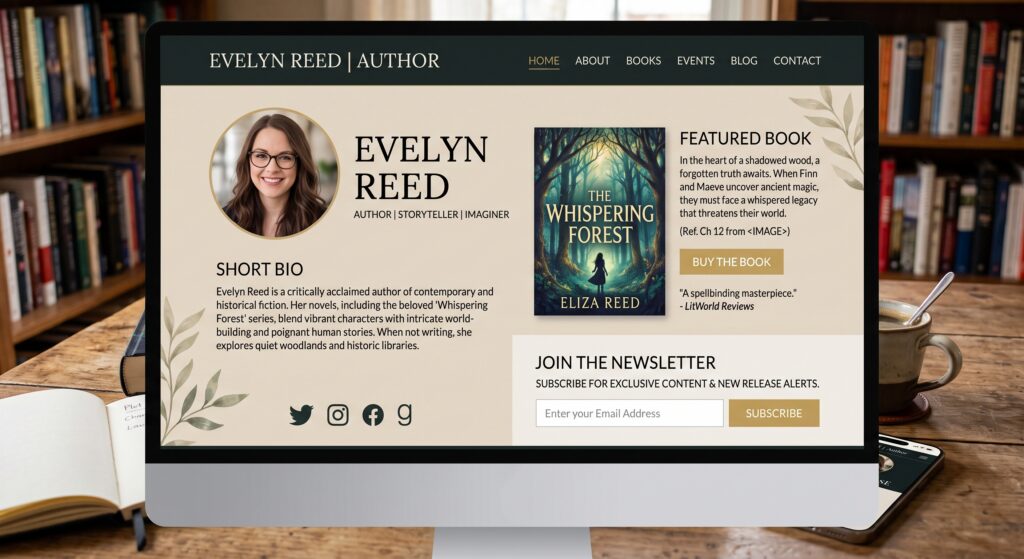
Within a few seconds, visitors should understand who you are, what you write, and where to go next.
2. A Professional About Page
Our “About” page is one of the most important pieces of an author website because readers are often curious about the person behind the book. That does not mean we need to write an autobiography. A strong author bio can tell readers who we are, what we write, what inspires our work, and anything relevant to our credentials or experience.
- If we write nonfiction, professional credentials may be particularly important.
- If we write fiction, readers may be more interested in our creative background, influences, interests, and the stories we love to tell.
We recently explored this in our post, “How to Write an Author Bio That Doesn’t Sound Cringe,” because writing about ourselves can be surprisingly uncomfortable.
Our website gives that bio a permanent home.
3. A Dedicated Books Page
If we have published books, readers should be able to find them easily.
A dedicated “Books” page can include the cover, title, description, genre, publication information, and links to purchase or learn more.
If we have multiple books, organizing them by series, genre, or publication order can make navigation easier.
We should also make each individual book easy to share. A dedicated page for each title gives us another opportunity to provide useful information and another page that search engines can potentially discover.
Google recommends logical site organization and descriptive URLs because these structures can help users and search engines understand how pages relate to one another.
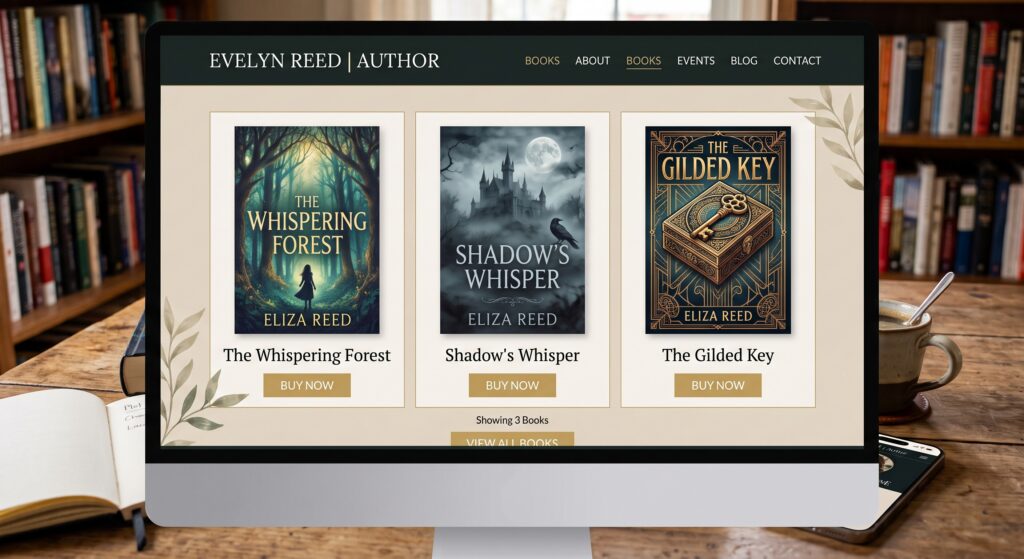
Make it ridiculously easy for readers to discover your books.
4. An Email Newsletter Signup
This is one of the biggest author website must-haves we would prioritize. Social media followers are valuable, but we do not control the platform, its algorithm, or whether our posts reach those followers. An email list gives us a direct communication channel with readers who have specifically chosen to hear from us.
Our signup could offer something useful in exchange for the reader’s email address. Depending on our audience, that might be a free short story, printable, sample chapter, writing resource, bonus scene, reading guide, or exclusive announcement.
The key is giving readers a reason to subscribe.
“Join my newsletter” may work for an established author with a devoted fan base.
“Get a free short story and occasional behind-the-scenes updates” gives a new visitor a much clearer reason to hand over an email address.
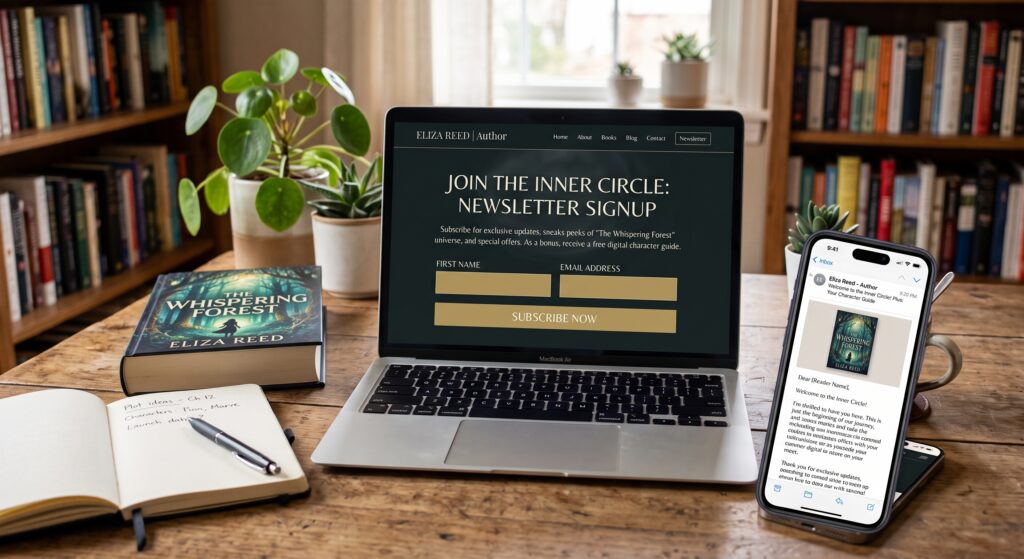
Social media can introduce readers to us. An email list gives us a direct way to stay connected.
5. A Blog or Resource Library
We should not create a blog simply because someone told us every author needs one. We should create content that gives readers a reason to visit our website.
For TrailHawk Publishing, The Hawk’s Nest allows us to discuss writing, publishing, books, authorship, and the realities of building an author career. That content also creates additional opportunities for search visibility. Google’s current SEO guidance emphasizes creating useful, unique, well-organized content rather than producing pages simply to manipulate search rankings.
Our recent article, “The Real Timeline of Building an Author Career,” is a good example of how an author-focused blog can address questions readers and aspiring writers are actually asking.
6. Search-Friendly Page Titles and Descriptions
SEO should be considered when we build an author website, but we do not need to stuff every page with keywords. Each important page should have a clear, descriptive title.
Instead of a page title like “Home,” we might use an author name and a useful descriptor.
Instead of “Book 1,” we should use the actual book title.
Google recommends unique, descriptive titles and meta descriptions because they help communicate page relevance to people encountering our site through search. Our goal should be to make the page understandable to both humans and search engines.
7. High-Quality Images With Descriptive Alt Text
Our author website should look good, but images also need to serve a purpose.
We might use professional author photographs, book covers, illustrations, event photographs, or relevant editorial images. We should avoid uploading enormous image files that slow down the website, and we should give meaningful images descriptive alt text.
Google specifically recommends placing high-quality images near relevant text and using descriptive alt text so search engines can better understand the image and its relationship to the page.
Alt text should describe the actual image rather than become a keyword dump.
For example:
“Author standing beside a table displaying her debut novel” is useful.
“Best author writer author website book author publishing writer” is not.
8. Mobile-Friendly Design
We cannot assume visitors are sitting at a desktop computer. Our website needs to work comfortably on phones and tablets as well as larger screens.
- Buttons should be easy to tap.
- Text should be readable.
- Images should resize appropriately.
- Menus should be understandable.
Google’s developer guidance specifically recommends that websites be secure, fast, accessible, and functional across devices.
This is especially important for authors because someone may discover us through Instagram, Threads, Pinterest, a QR code at an event, or a link inside an email. Those visitors are very likely to arrive from a mobile device.
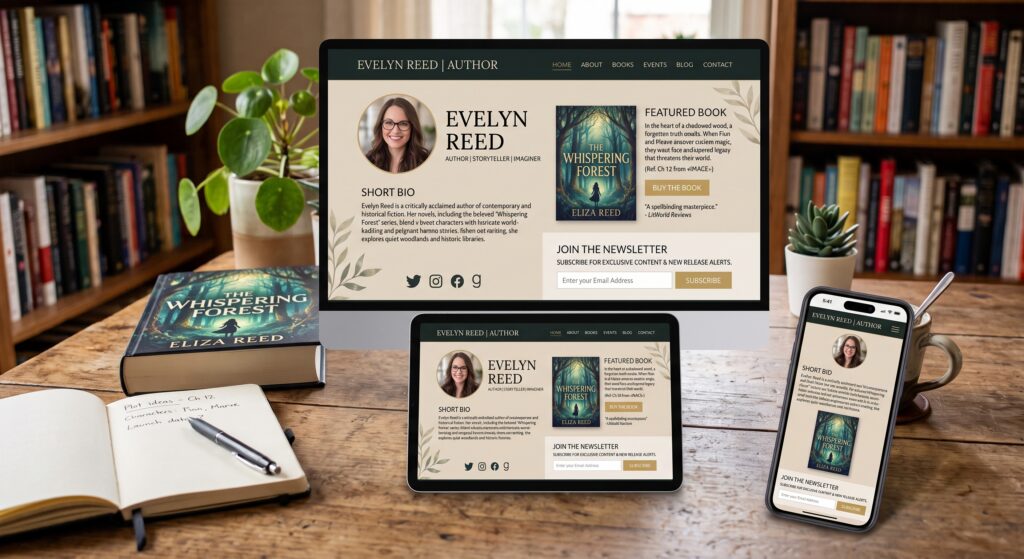
If readers cannot comfortably use our website from their phones, we have a problem.
9. A Simple Contact Page
Readers, bookstores, podcasters, journalists, event organizers, and potential collaborators may need to contact us.
We should make that process easy.
Our “Contact” page can include a professional email address or contact form and, where appropriate, information about speaking engagements, media inquiries, school visits, book clubs, or other opportunities.
We should avoid publishing unnecessary personal information.
A professional contact form can give us a way to receive inquiries without making our private information the centerpiece of the website.
10. Social Media Links
Our website and social platforms should work together. If we have Instagram, Threads, Pinterest, Facebook, TikTok, YouTube, or another platform where we actively engage with readers, we can provide appropriate links from our website.
The key word is “actively.” We do not need fifteen social media icons if we only use three platforms. We want visitors to know where they can find us and what kind of content they will see there.
11. Clear Book Purchase Links
Once a reader decides they want our book, we should make purchasing it easy.
Depending on our publishing strategy, we might link to Amazon, Bookshop.org, Barnes & Noble, an independent bookstore, or another legitimate retailer.
For readers who want to support independent bookstores, we can also include a Bookshop.org option such as the TrailHawk Publishing Bookshop.
The important thing is to avoid making readers search for where to buy the book.
If they have already decided they want it, our website should help them complete that journey.
12. A Fast and Secure Website
A beautiful website that takes forever to load is frustrating.
In 2026, website performance remains an important part of creating a good user experience. Google also recommends websites that are secure, fast, accessible, and usable across devices.
That means we should pay attention to oversized images, unnecessary plugins, excessive animations, broken links, outdated themes, and other technical issues.
We should also make sure our website uses HTTPS. A simple, fast website can be considerably more effective than an elaborate website that overwhelms visitors.
13. Analytics and Search Console
We cannot improve what we never measure. Connecting an author website to analytics and Google Search Console can help us understand how people discover and interact with our site. Search Console can show information about search performance and help us identify technical or indexing issues. Google specifically recommends Search Console as a way to monitor and optimize a site’s presence in Google Search.
We do not need to obsess over the numbers every day. Checking periodically can help us discover useful information.
- Maybe one blog post is attracting considerably more search traffic than the others.
- Maybe readers are searching for a question we have never addressed.
- Maybe a page is not being indexed as expected.
That information can influence what we create next.
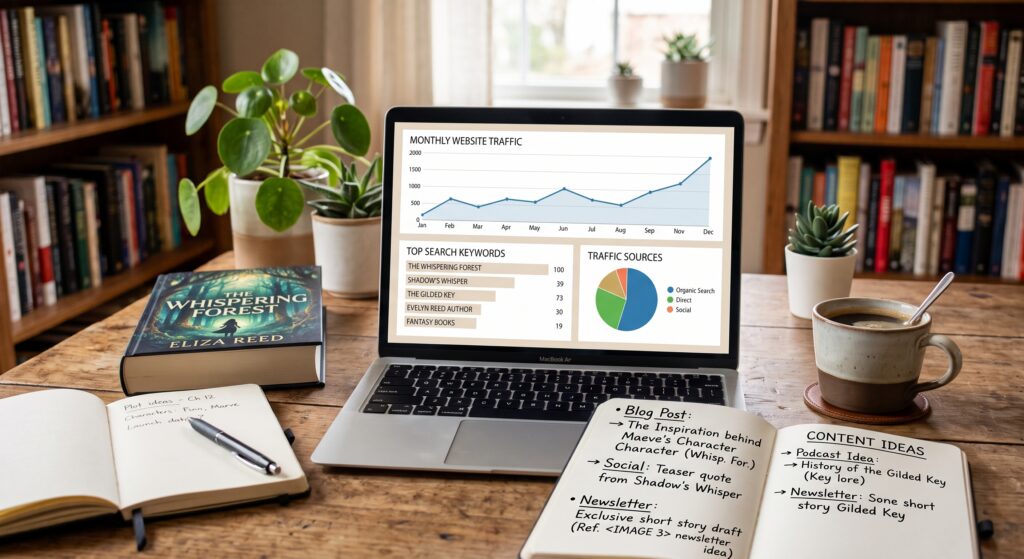
We cannot improve our website strategically if we never look at what readers are actually doing.
14. Structured Data Where Appropriate
This is one of the more technical author website improvements we can consider!
Structured data gives search engines additional information about the content of a page. Google supports structured data for several types of content, including articles, breadcrumbs, profiles, and products.
We do not need to add complicated schema markup simply because it sounds impressive. If our website platform or SEO plugin handles appropriate structured data automatically, we can make sure it is configured correctly.
Google also emphasizes that structured data can make pages eligible for certain enhanced search appearances, but it does not guarantee that those features will actually appear.
That distinction matters.
SEO is about improving our eligibility and helping search engines understand our content, not finding a magic button that guarantees rankings.
15. A Clear Call to Action
Every important page should give visitors some idea of what they can do next.
- Read the book.
- Join the newsletter.
- Explore the series.
- Read the blog.
- Book an author event.
- Contact us.
- Follow us.
- Download a free resource.
We do not need a giant flashing “BUY NOW” button on every page. We simply need to avoid leaving visitors at a dead end:
If someone finishes reading our About page and wants to learn more, where should they go?
If someone finishes a blog post and wants to become a reader, what should happen next?
If someone discovers a book, how easily can they purchase it?
A strong website guides people without making them feel pushed.
Your Author Website Is Part of Your Long-Term Platform
One of the biggest mistakes we can make is treating an author website as something we build once and forget. An author career evolves.
- Our book catalog grows.
- Our audience changes.
- Our bio changes.
- Our newsletter develops.
- Our media appearances accumulate.
- Our blog grows.
- Our goals change.
As we discussed in “The Real Timeline of Building an Author Career,” building an author career involves developing multiple systems over time rather than expecting one book to create an entire career overnight. Our website should grow with that career. We do not need to build everything on day one.
A new author might begin with a homepage, About page, Books page, Contact page, newsletter signup, and a small number of useful resources. As the author career develops, we can add individual book pages, a media kit, event information, reader bonuses, additional content, and other features.
The goal is to build something useful now that can grow later.
Final Thoughts
An author website in 2026 does not need to be complicated. It needs to be useful. We want readers to know who we are, understand what we write, discover our books, connect with us, and take the next step without fighting their way through a maze of menus.
At TrailHawk Publishing, we think of an author website as the foundation underneath the rest of the platform. Social media can send people there. Search engines can help people discover it. Blog posts can bring new visitors. Books can turn visitors into readers. Email can turn readers into a long-term audience.
And unlike a social media account, our website gives us considerably more control over the experience. If we are building an author career in 2026, that makes a well-designed website worth taking seriously.
What is the one thing you think every author website absolutely needs? Tell us in the comments, and let us know what you would add to this list.
Our Affiliate Links:
- Miblart – cover designs and other services
- Bookshop – curated book lists
- Scrivener – writing workflow
- Fiverr – find freelance talent
- Book Bolt – keyword search
- Publisher Rocket – keyword/category search
Our Referral Links:
- Upwork – more freelance talent
- Printful – print-on-demand merch
- Creative Fabrica – fonts and images
Join our community! Follow @TrailHawkPublishing for publishing tips and behind-the-scenes updates: