
Disclosure: If you click any of our affiliate links and make a purchase, we will earn a commission (at no extra cost to you).
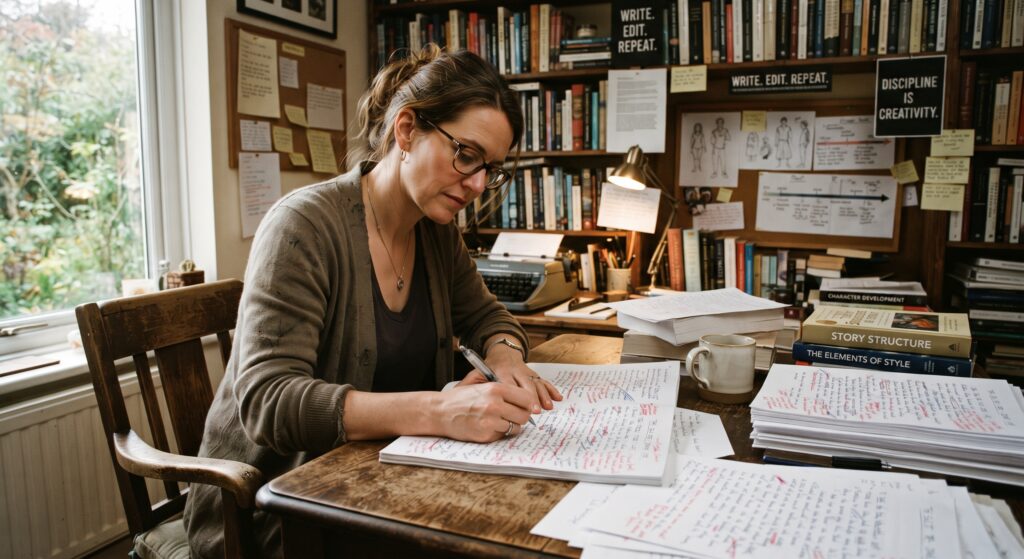
Writing a book takes creativity, patience, and a willingness to revise.
Writing a book is a creative achievement that requires time, persistence, and a willingness to keep going when the words refuse to cooperate. Selling a book, however, requires a different set of skills. It involves understanding readers, communicating a book’s value, choosing effective marketing channels, and giving people a reason to buy. Although these two activities are closely connected, they are not the same job.
At TrailHawk Publishing, we believe authors benefit from understanding this distinction early in their publishing journey. When we finish a manuscript, we may feel that the hardest part is behind us. In many ways, it is a major milestone, but publication introduces a new challenge: helping the right readers discover the book.
Whether we plan to self-publish or pursue traditional publishing, understanding the difference between writing a book and selling a book can help us set more realistic expectations, use our time wisely, and build a sustainable author career.
Writing a Book Requires Creativity, Discipline, and Revision
Writing begins with an idea. We might develop a fictional world, explore a personal experience, teach a skill, or explain a subject we know well. From there, we turn that idea into a manuscript through research, outlining, drafting, editing, and revision.
The writing process often requires us to work without immediate external rewards. We may spend months developing a story or refining a nonfiction chapter without knowing whether readers will connect with the finished product. Progress can be difficult to measure, especially when we are revising material that already took considerable effort to create.
Successful writing also involves learning to evaluate our own work. We need to recognize when a scene lacks tension, when an explanation is confusing, or when a chapter no longer serves the book. Feedback from editors and beta readers can help us identify weaknesses that are difficult to notice when we are deeply invested in the manuscript.
If we are struggling to finish our first project, we may find it helpful to read our post on “Why So Many Writers Never Finish Their First Book.” Finishing a manuscript requires a process that supports consistent progress, even when inspiration is inconsistent.
The central goal during writing is to create a book that delivers on its promise to the intended reader. Marketing becomes much easier when we can clearly explain what that promise is.
Selling a Book Requires Understanding the Reader
When we shift from writing to selling, our primary question changes. Instead of asking, “What do I want to say in this book?” we begin asking, “Who is this book for, and why would that person want to read it?”
This does not mean changing our creative vision to appeal to everyone. In fact, trying to market a book to everyone can make its message less distinctive. A romance novel, a practical budgeting guide, a fantasy adventure, and a guided journal appeal to different readers for different reasons. Effective marketing begins with identifying those differences.
We can start by describing our ideal reader in specific terms. What interests them? What problems are they trying to solve? What other books might they enjoy? Where do they look for recommendations, and what language do they use when talking about their favorite genres or subjects?
These questions help us develop a more useful description of the book and choose marketing activities that make sense for its audience. A writer publishing a children’s picture book may benefit from reaching parents, educators, librarians, and gift buyers. An author publishing a productivity guide may focus on readers searching for practical solutions to a particular challenge.
Our goal is to connect the right book with the right reader. That connection is more useful than chasing attention from people who are unlikely to be interested in the subject or genre.
A Good Book Does Not Automatically Sell Itself
We often hear stories about books that became popular through word of mouth, social media, or unexpected attention. Those stories can make success appear spontaneous, but they do not guarantee that a newly published book will attract readers without ongoing effort.
A book can be well written and still struggle to sell if potential readers never discover it. The cover may not communicate the genre clearly, the description may not explain the book’s appeal, or the book may be difficult to find among competing titles. Pricing, reviews, discoverability, and the author’s ability to reach relevant readers can also influence purchasing decisions.
This is why we need to think beyond the manuscript itself. A book’s presentation helps readers decide whether it deserves their attention, particularly when they are browsing online and comparing many options.
For self-published authors, that presentation includes elements such as the cover, title, subtitle where appropriate, book description, categories, and search keywords. These elements should work together to set accurate expectations and help readers understand what makes the book relevant to them.
Our article on “Why Some Self-Published Books Fail Even With Good Writing” explores related challenges. Strong writing matters, but the reader’s experience begins before they open the first page.

Readers often encounter a book’s cover and description before they ever read a page.
Writing and Selling Need Different Skills
Writers often develop strong skills in storytelling, research, teaching, or communication. Selling a book requires us to apply those skills in a different context, and we may need to learn new ones.
For example, writing a compelling chapter does not automatically teach us how to create an effective product description. Knowing our story inside and out does not necessarily make it easy to explain the book’s appeal in a short social media post. We may also need to learn basic search engine optimization, email marketing, content planning, advertising principles, or how to interpret sales reports.
We do not have to master every marketing channel at once. Instead, we can build a manageable set of skills that supports our current publishing goals.
If we need help with a specific task, we can consider hiring a freelancer rather than trying to become an expert in every area. Fiverr offers access to freelancers providing services such as book cover design, formatting, and promotional graphics. Upwork is another option for finding independent professionals, including editors, designers, and marketing specialists. Before hiring anyone, we should review relevant samples, clarify the scope of work, check recent feedback, and agree on deliverables and costs.
Outsourcing is not essential for every author, especially when funds are limited. It is simply one option for tasks that require specialized skills or take time away from writing.
Book Marketing Should Begin Before Publication
One common mistake is waiting until publication day to think about selling the book. By then, we may be exhausted from editing, formatting, uploading files, and resolving last-minute details. Starting marketing earlier gives us more time to prepare and begin connecting with potential readers.
During the writing and editing stages, we can identify the audience, research comparable books, establish a basic author website, and begin sharing useful or interesting content related to our subject. We can also invite interested readers to join an email list, provided we have a clear reason for them to subscribe and a plan for communicating with them.
As publication approaches, we can prepare the book description, promotional images, launch announcements, and a realistic schedule for sharing information. If we plan to ask people to review the book, we should follow the rules of the platform we use and avoid offering incentives in exchange for positive reviews. Readers should be free to express honest opinions.
A prepublication marketing plan does not need to be elaborate. A simple calendar with a few recurring tasks is often more practical than a complicated strategy we cannot maintain. We can learn more about pacing the journey in “The Real Timeline of Building an Author Career.”
The purpose of starting early is to create opportunities for discovery, not to guarantee a particular number of sales on launch day.
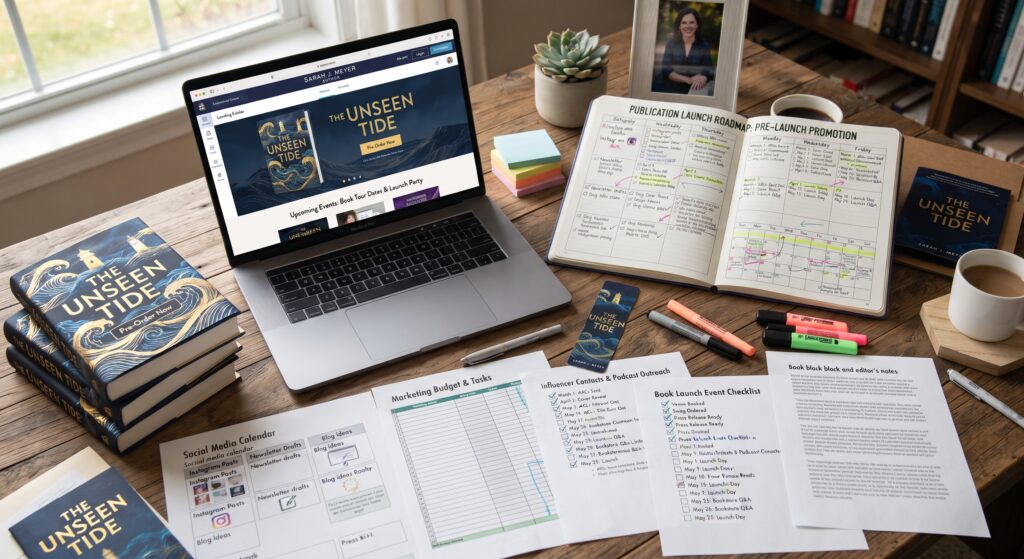
A simple marketing plan can help authors prepare to connect with readers before launch day.
Selling a Book Is About More Than Social Media
Social media can help authors connect with readers, but it is only one possible part of a marketing strategy. We may see other authors posting every day and assume we need to do the same. In reality, the best channels depend on the book, the audience, our resources, and the kind of work we can sustain.
Some authors benefit from an email newsletter because it gives them a direct way to communicate with interested readers. Others build visibility through guest articles, podcasts, book clubs, local events, professional networks, library programs, or partnerships with creators who serve a relevant audience. Authors of nonfiction books may also find opportunities to speak about the subject they cover, while fiction writers might connect with genre communities and readers who enjoy similar stories.
We should choose marketing activities based on their purpose rather than popularity. If our ideal readers use Pinterest to find reading lists or creative resources, it may be worth testing that platform. If they gather in established genre communities, thoughtful participation may be more effective than posting promotional messages in unrelated spaces.
We should also distinguish between attention and sales. A post can receive many views without generating purchases, while a smaller, more focused audience may be more likely to buy a book. Tracking clicks, email sign-ups, book-page visits, and sales where the data is available can help us learn which activities are worth repeating.
Marketing is an ongoing process of testing and adjusting. We can start small, observe what happens, and use the results to make better decisions rather than assuming that one tactic will work for every book.
Authors Need to Protect Time for Both Activities
The challenge is that writing and marketing compete for the same limited hours. If we spend all our available time promoting a book, we may struggle to finish the next one. If we focus exclusively on writing, we may have no consistent way to introduce our work to new readers.
A sustainable schedule gives both activities a place without expecting us to work every waking hour. We might reserve certain sessions for drafting and revision, then set aside a shorter block each week for reader outreach, website updates, or marketing content. The exact balance will depend on whether we are drafting a new book, preparing for launch, or promoting a title that has already been published.
We can also create reusable materials to reduce repeated work. A collection of approved book descriptions, author photos or graphics, short excerpts, frequently asked questions, and social captions can make future promotion easier. When we publish multiple books in a related genre or subject area, we may be able to introduce readers to the wider catalog instead of promoting every title as if it exists in isolation.
Over time, our marketing can become more organized because we understand our audience better and have more information about what readers respond to. We should still allow room for experimentation, but we do not need to reinvent our entire approach every week.
Measure Progress Without Letting Sales Define Your Worth
Book sales matter when we are trying to build a business, but they are not a complete measure of our abilities as writers. Sales can be affected by discoverability, timing, pricing, competition, audience size, genre expectations, and many other factors outside our direct control.
Rather than judging a book’s future from its first few days on sale, we can review meaningful indicators over a reasonable period. Are more people finding the book? Are readers visiting our website or joining our newsletter? Are certain descriptions or promotional approaches generating more interest? Are we reaching the audience we intended to serve?
These questions give us information we can act on. If a book page receives visits but few purchases, we might review its cover, description, sample pages, or price in context. If very few people are discovering the book, we may need to focus on visibility and audience outreach. Any change should be based on evidence where possible, not on the assumption that the manuscript itself must be the problem.
We can also set goals that are within our control, such as completing a marketing task each week, contacting a relevant book community, or improving one part of our author website. These actions will not guarantee sales, but they help us build a repeatable process rather than relying on luck.

Tracking results helps us make informed decisions about what to improve in our book marketing.
Writing the Book Is an Achievement. Helping Readers Find It Is the Next Step.
Writing and selling a book require different kinds of effort, and both deserve attention. Writing gives us the opportunity to create something meaningful, useful, entertaining, or memorable. Selling helps us communicate that value to readers who may never discover the book on their own.
We do not need to become full-time marketers overnight, spend money we cannot afford, or follow every publishing trend. We need to understand who our readers are, present our books clearly, choose appropriate ways to reach people, and give our marketing enough consistency to learn what works.
At TrailHawk Publishing, we encourage authors to view marketing as a skill they can develop over time. Each book offers another opportunity to understand our audience, improve our presentation, and build relationships with readers.
Finishing the manuscript is a major milestone, but it does not have to be the end of our work. When we combine thoughtful writing with a realistic plan for helping readers discover our books, we give that work a better opportunity to find its audience.
What has been more challenging for you so far: writing your book or figuring out how to sell it? Share your experience in the comments.
Our Affiliate Links:
- Miblart – cover designs and other services
- Bookshop – curated book lists
- Scrivener – writing workflow
- Fiverr – find freelance talent
- Book Bolt – keyword search
- Publisher Rocket – keyword/category search
Our Referral Links:
- Upwork – more freelance talent
- Printful – print-on-demand merch
- Creative Fabrica – fonts and images
Join our community! Follow @TrailHawkPublishing for publishing tips and behind-the-scenes updates: