Disclosure: If you click any of our affiliate links and make a purchase, we will earn a commission (at no extra cost to you).
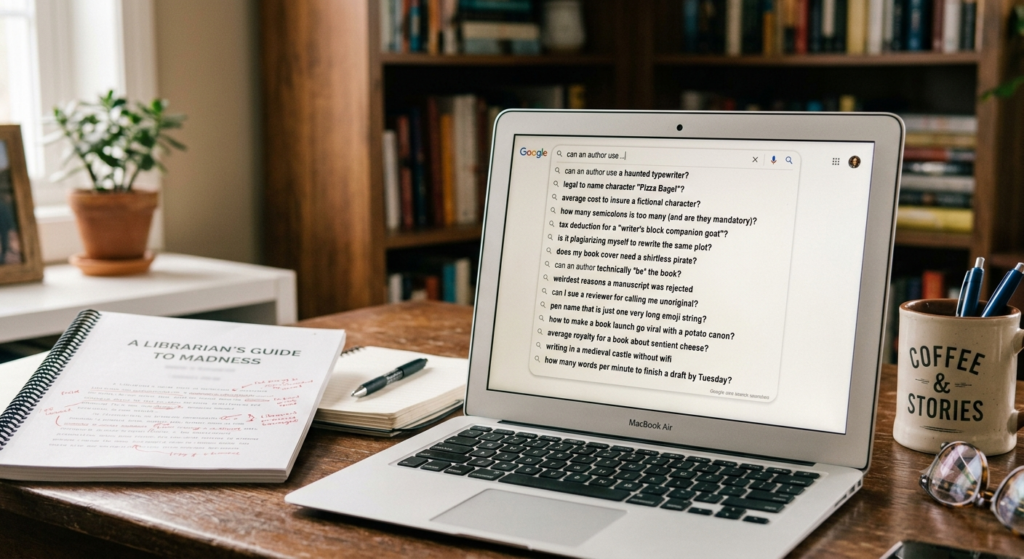
Behind every great story is a surprisingly strange search history.
If someone looked at your search history without any context, they might think you were planning a crime, preparing for an archaeological expedition, or training to survive in the wilderness.
The truth?
You’re probably just writing a book.
At TrailHawk Publishing, we know authors conduct an incredible amount of research. Whether you’re writing fiction or nonfiction, readers expect believable details. Even if only a single sentence appears in your manuscript, you may spend twenty minutes researching it to make sure it’s accurate.
That research often leads to some very unusual search queries.
From obscure historical facts to medical questions and bizarre animal behavior, authors routinely search for information that would raise a few eyebrows out of context.
Let’s take a look at some of the weirdest things authors Google and why good research matters.
“How Long Can Someone Survive Without Water?”
This question appears on countless authors’ search histories.
Writers creating survival stories, thrillers, dystopian fiction, or historical novels often need realistic timelines.
The answer depends on numerous factors including age, health, temperature, physical activity, and access to shelter. Because survival varies significantly from person to person, authors should avoid relying on a single source and instead look for information from reputable medical or emergency preparedness organizations.
Small details like this help readers stay immersed in the story.
“Would This Injury Actually Be Fatal?”
Television sometimes makes injuries appear far more survivable or far more deadly than they actually are.
Authors frequently research:
- gunshot wounds
- broken bones
- concussions
- blood loss
- burns
- infections
- recovery timelines
Accurate medical information creates believable stories while avoiding common misconceptions.
If you’re writing scenes involving healthcare, consulting professionals or hiring subject matter experts through platforms like Upwork can improve accuracy.
“What Did People Eat in 1473?”
Historical fiction authors know readers notice details.
Food, clothing, transportation, language, architecture, and daily routines all contribute to authentic world building.
Even a simple dinner scene may require researching ingredients available during a particular century or region.
Readers appreciate historical accuracy because it helps transport them into another time.
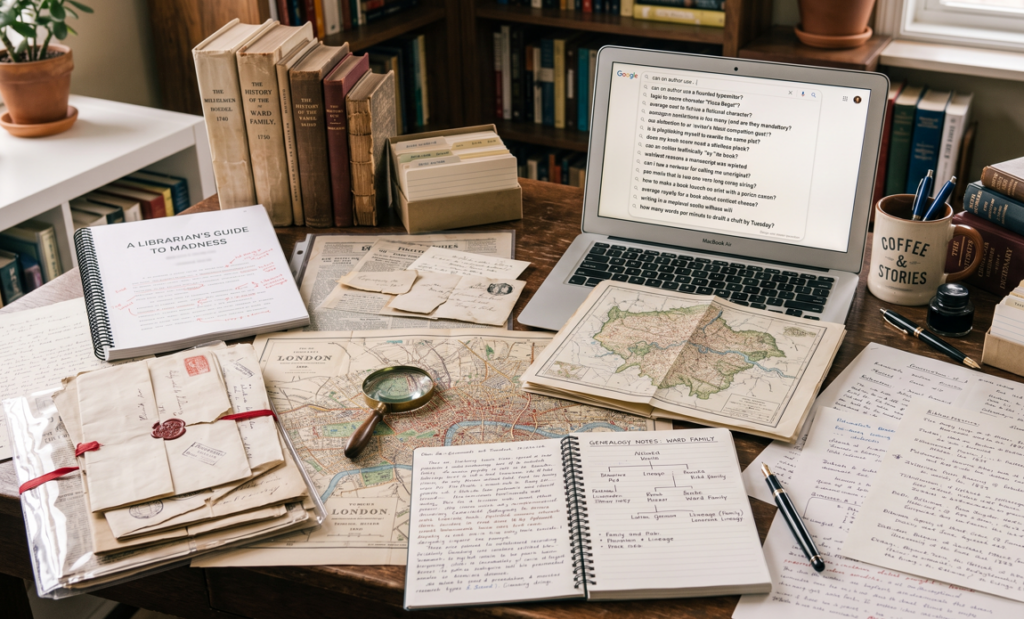
Authentic details help transport readers to another time.
“How Much Does a Castle Weigh?”
Is this information essential?
Probably not.
Has an author searched for it?
Almost certainly.
Writers often discover one unusual question leads to five more.
Research tends to snowball.
One search about castles becomes searches about stone, engineering, medieval labor, architecture, transportation, and construction techniques.
Curiosity is one of an author’s greatest strengths.
“Can Ravens Actually Remember Faces?”
Yes, research suggests they can.
Animal behavior fascinates many writers because it creates opportunities for memorable scenes.
Authors frequently investigate:
- wolf pack behavior
- octopus intelligence
- elephant memory
- bird migration
- horse communication
Even fantasy writers often base fictional creatures on real animal behavior.
“How Many Books Fit on a Bookshelf?”
Not every strange search involves fiction.
Self-published authors often find themselves researching surprisingly specific publishing questions.
For example:
- shelf dimensions
- trim sizes
- spine width
- paper thickness
- shipping weights
- printing costs
Practical questions like these help authors make informed publishing decisions.
Our article “How Long Should a Book Chapter Be?” explores another common publishing question that rarely has a single correct answer.
“What Color Was the Sky During a Volcanic Eruption?”
Atmospheric details help readers visualize scenes.
Authors frequently research weather, astronomy, geography, and natural disasters to strengthen descriptions.
Accurate environmental details often make fictional settings feel remarkably real.
Sometimes a single sensory detail leaves a lasting impression on readers.
“Can Someone Cry Without Tears?”
Human behavior generates endless research questions.
Authors want believable emotional reactions.
They research:
- grief
- trauma
- memory
- sleep deprivation
- fear
- body language
- stress responses
Writing authentic characters often requires understanding psychology as much as plot.
If emotional realism interests you, you may enjoy our article “Writing as Healing: Why So Many Authors Write From Pain,” where we explore how genuine emotions strengthen storytelling.
“What Happens If…”
This may be the most common author search of all.
What happens if…
-
someone falls through ice?
-
lightning strikes a tree?
-
a passport expires overseas?
-
someone misses jury duty?
-
two countries have different inheritance laws?
-
a submarine loses power?
-
a bee stings someone hundreds of times?
Authors constantly ask hypothetical questions because stories thrive on possibilities.
The internet simply becomes one giant research assistant.
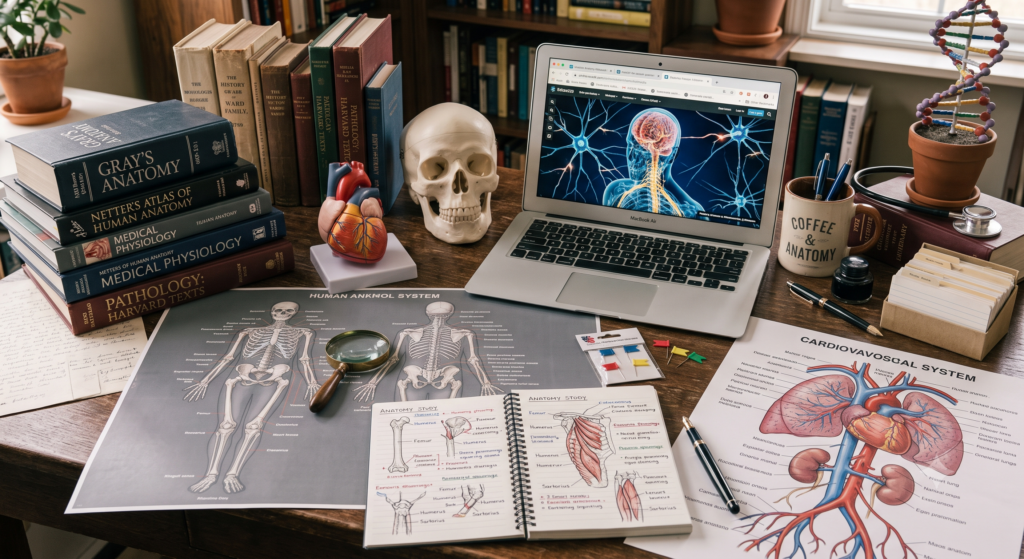
Accurate medical details help create believable stories.
Research Makes Better Stories
Readers may never realize how much research went into a single paragraph.
That’s perfectly fine.
Successful research should feel invisible.
When facts naturally support the story, readers remain immersed rather than distracted.
Research also helps authors avoid accidentally spreading misinformation.
Whenever possible, verify information using multiple reliable sources instead of relying on assumptions or entertainment media.
Staying Organized During Research
Research can quickly become overwhelming.
One question leads to another, which leads to another, until you have dozens of browser tabs open.
Many authors use Scrivener to keep research notes, character profiles, timelines, and manuscripts organized in one place.
If you’re designing journals, activity books, or low-content books, BookBolt can simplify research and creation. You can also save 20% with the code TRAILHAWK.
For cover design, Miblart offers professional designs tailored to your genre, while freelancers on Fiverr and Upwork can assist with editing, formatting, illustration, and other publishing tasks.

Organized research saves time during drafting and revisions.
The Best Authors Never Stop Learning
Perhaps the strangest thing about author research isn’t the questions themselves.
It’s the curiosity behind them.
Every unusual Google search represents a writer trying to create a richer world, a more believable character, or a stronger reading experience.
That curiosity is one of the qualities that separates good writers from great ones.
At TrailHawk Publishing, we encourage writers to embrace lifelong learning. Every answer you discover strengthens your ability to tell compelling stories that readers can believe.
The next strange question you type into a search engine might become the tiny detail that makes your entire story unforgettable.

Sometimes the weirdest Google search leads to the best story.
We’d Love to Hear From You
What’s the weirdest thing you’ve ever Googled while writing a book? Share your funniest or most surprising search in the comments below. You might inspire another author’s next story!
Our Affiliate Links:
- Miblart – cover designs and other services
- Bookshop – curated book lists
- Scrivener – writing workflow
- Fiverr – find freelance talent
- Book Bolt – keyword search
- Publisher Rocket – keyword/category search
Our Referral Links:
- Upwork – more freelance talent
- Printful – print-on-demand merch
- Creative Fabrica – fonts and images
Join our community! Follow @TrailHawkPublishing for publishing tips and behind-the-scenes updates: