
Disclosure: If you click any of our affiliate links and make a purchase, we will earn a commission (at no extra cost to you).

Publishing your first book can bring an unexpected mix of pride, relief, exhaustion, and uncertainty.
You finally did it.
After months, or perhaps years, of writing, revising, formatting, designing, researching, uploading files, checking proofs, and wondering whether you were actually going to finish, your first book is finally published.
For a moment, everything feels incredible. You see the listing. You hold the finished copy in your hands. You tell people that you are officially a published author. Maybe you celebrate with dinner, champagne, a social media post, or a quiet moment where you simply stare at the book and think, “I actually did this.”
Then something unexpected happens.
The excitement fades.
You wake up the next morning and realize there is no longer a giant publishing deadline hanging over you. The manuscript is finished. The book is live. The launch posts have gone out. The proof has been approved.
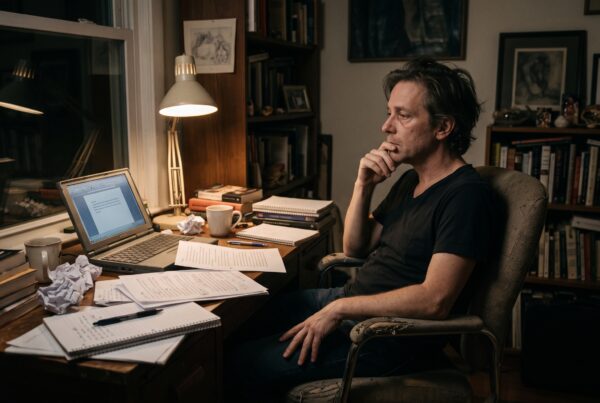
And suddenly, you feel strangely empty.
If that has happened to you, you are not failing as an author. The emotional crash after publishing your first book is a surprisingly understandable reaction to completing a major creative project.
At TrailHawk Publishing, we think this part of the author journey deserves more attention because we spend so much time talking about getting published that we rarely talk about what happens emotionally after the book is actually out in the world.
You Have Been Running on a Deadline for Months
Publishing a book requires sustained effort.
Even after the manuscript itself is complete, there are still decisions to make about editing, formatting, cover design, metadata, pricing, distribution, marketing, and launch preparation. You may spend weeks checking tiny details because you know that once the book goes live, changing things becomes more complicated.
That prolonged period of effort creates momentum.
You always have something to work toward.
When publication finally happens, that momentum can disappear almost overnight.
The result can feel surprisingly similar to the emotional letdown people experience after completing other major projects. You have spent so much energy reaching the finish line that your brain suddenly has to adjust to the absence of the goal that has been occupying your attention.
This is one reason the day after publication can feel very different from publication day itself.

When the deadline disappears, the emotional transition can be surprisingly difficult.
Your First Book Carries a Lot of Emotional Weight
Your first book is rarely just a book.
It can represent a dream you have carried for years. It may represent the version of yourself who finally stopped saying, “Someday, I’ll write a book,” and actually sat down to write one.
That makes publishing emotionally significant.
You may feel proud, relieved, terrified, vulnerable, excited, and exhausted within the same week.
You may also start questioning everything.
Was the book good enough? Will anyone buy it? What will people think? Will anyone leave a review? Did you choose the right cover? Should you have changed the ending? Should you have waited another month?
These questions are common because publication removes the protective distance between you and your work. While the manuscript was sitting on your computer, it belonged primarily to you. Once it is published, other people can read it, review it, criticize it, recommend it, ignore it, or simply never discover it.
That vulnerability can be difficult.
The Book May Not Sell Immediately
One of the biggest emotional shocks for first-time authors is realizing that publication does not automatically produce sales.
You may have imagined seeing orders arrive immediately after launch. Perhaps you expected friends and family to purchase copies. Maybe you pictured your book climbing the rankings and receiving enthusiastic reviews within days.
Sometimes those things happen.
Often, they do not.
A quiet launch does not necessarily tell you whether your book has potential. Books need discoverability, and discoverability can take time. Readers have to find your book among an enormous number of available titles.
This is something we explored in our article, “Why Some Self-Published Books Fail Even With Good Writing.” A strong manuscript is important, but cover design, metadata, audience targeting, positioning, reviews, marketing, and discoverability can all influence how a book performs.
If your first week is quiet, give yourself permission to feel disappointed without immediately deciding that the book was a failure.
Those are two very different things.

A quiet launch does not automatically mean your book has failed.
You May Feel Like You Should Immediately Start Another Book
Once the first book is finished, you may feel pressure to start the next one immediately.
There is certainly value in continuing to write. Building a backlist can help authors establish a larger catalog, and writing consistently allows you to develop your skills.
However, there is also value in recovering from the intensity of a major creative project.
You have just spent months living inside a story, researching characters, revising chapters, solving plot problems, and making hundreds of decisions. Taking a short break does not mean you have lost your momentum.
It can give you enough distance to return to your work with clearer judgment.
If you do begin another manuscript, tools such as Scrivener can help you organize chapters, research, notes, and future projects without keeping everything scattered across documents and browser tabs.
You May Suddenly Miss Your Characters
This one catches some authors completely off guard.
When you spend months or years developing characters, they become familiar.
You know their histories. You understand their fears. You know what they would say in a particular situation. You may even find yourself thinking about them while doing completely unrelated things.
Then the story ends.
Your characters’ journey is complete, and you have to step away from them.
For some authors, that can create a genuine sense of loss.
This is particularly understandable when the characters have been connected to emotionally meaningful themes. In our article “Writing as Healing: Why So Many Authors Write From Pain,” we explored how authors sometimes draw on difficult emotions and experiences when creating stories.
Finishing such a project can therefore involve more than completing a manuscript. You may also be closing a chapter of your own life.

After living with your characters for months, finishing their story can feel surprisingly emotional.
You May Start Obsessing Over Reviews
Waiting for reviews can become its own emotional roller coaster.
You check your book page.
Nothing.
You check again.
Still nothing.
Then a notification finally appears, and suddenly your mood depends on a few paragraphs written by someone you may never meet.
Reviews matter because they help potential readers evaluate unfamiliar books. At the same time, they are subjective. One reader may love your pacing while another finds it too slow. Someone may adore a character you considered secondary. Another reader may dislike exactly the element you thought made the story special.
A review is one person’s response to your book.
It is valuable information, but it is not a complete measurement of your worth as a writer.
You May Start Comparing Yourself to Other Authors
Social media can make the post-publication period particularly difficult.
You see authors announcing bestseller rankings, sharing screenshots of sales, celebrating hundreds of reviews, showing beautiful book launches, and announcing their next contracts.
Meanwhile, you may be sitting at home wondering why your own book is not producing the same results.
The problem is that you rarely see the entire picture behind those posts.
You do not know how many years someone has been writing. You do not know how many books they have published, how large their audience is, how much they spent on advertising, or how many launches preceded the one they are celebrating.
Our article “The Romanticized Author Life vs Reality” explores this gap between the glamorous image of authorship and the actual work involved in building a publishing career.
Your first book is the beginning of your catalog, not a final exam.

Remember that you are seeing someone else’s highlight reel, not their entire publishing journey.
You May Finally Realize How Much Work Publishing Actually Involves
Writing the book is only part of becoming an independent author.
Once you publish, you may discover that you enjoy some parts of the business more than others.
Perhaps you love designing interiors. Maybe marketing fascinates you. You might enjoy researching keywords and categories, or you may discover that you would happily pay someone else to handle your formatting.
That realization is useful.
You do not have to become an expert at every part of publishing.
If you need help with design, editing, formatting, research, or other specialized tasks, freelancers through Upwork and Fiverr can help you outsource individual parts of the process.
For professional cover design, Miblart is another option authors can explore.
The goal is to build a publishing process that is sustainable for you.
Give Yourself Time to Recognize What You Accomplished
The easiest thing to forget after publishing your first book is the most important thing.
You finished it.
You took an idea and turned it into a manuscript. You revised it. You made decisions. You dealt with uncertainty. You navigated the publishing process. You put your work into the world knowing that other people could judge it.
That is a significant accomplishment.
Whether you sell ten copies or ten thousand copies, you have crossed a line that many aspiring authors never cross.
There will be plenty of time to analyze sales, adjust your marketing, improve your next book, and build your catalog.
Before you immediately move on, give yourself a moment to appreciate the fact that you became the person you once hoped you would become: a published author.
What You Do Next Matters More Than What Happened on Launch Day
Your first book does not need to carry your entire author career.
You can learn from it.
You can update the cover if your market positioning changes. You can improve your description. You can experiment with advertising. You can develop a newsletter. You can create content around the book. You can write another title.
You can also decide that your next book will be completely different.
That flexibility is one of the advantages of independent publishing.
If you create journals, planners, or other low-content products, BookBolt can help with niche research and design. You can also use the code TRAILHAWK for 20% off. For broader publishing research, Publisher Rocket can help you investigate keywords and categories for books you are planning to publish.
Your first book gives you something incredibly valuable: experience.
You know more about writing and publishing now than you did before you started.

Before you move on to the next project, take a moment to celebrate becoming a published author.
Final Thoughts
The emotional crash after publishing your first book can feel confusing because everyone talks about how exciting publication is.
They show the cover reveal.
They celebrate launch day.
They take photographs holding the finished book.
They announce that their book is finally available.
Very few people talk about the quiet moment afterward when the adrenaline disappears and you wonder what you are supposed to do now.
If you experience that feeling, give yourself some grace.
You have completed something significant, and your emotions may need time to catch up with the accomplishment.
At TrailHawk Publishing, we believe becoming an author is a journey rather than a single publishing event. Your first book teaches you about writing, publishing, marketing, readers, and yourself. Some lessons will be exciting. Others may be uncomfortable. All of them can make your next project stronger.
So celebrate the book.
Let yourself rest.
Then, when you are ready, decide what comes next.
Your first published book is not the end of your author story. It is the first piece of evidence that you can build one.
Our Affiliate Links:
- Miblart – cover designs and other services
- Bookshop – curated book lists
- Scrivener – writing workflow
- Fiverr – find freelance talent
- Book Bolt – keyword search
- Publisher Rocket – keyword/category search
Our Referral Links:
- Upwork – more freelance talent
- Printful – print-on-demand merch
- Creative Fabrica – fonts and images
Join our community! Follow @TrailHawkPublishing for publishing tips and behind-the-scenes updates: