
Disclosure: If you click any of our affiliate links and make a purchase, we will earn a commission (at no extra cost to you).

The internet often glamorizes the writing life, but the reality behind publishing is far more complicated.
If social media is to be believed, the author life looks magical.
We picture ourselves writing beside a rainy window with a cup of coffee, soft music playing in the background, candles lit, and inspiration flowing effortlessly onto the page. We imagine book signings, beautiful hardcover editions, aesthetic desk setups, viral TikToks, and stacks of glowing reviews arriving the moment we hit “publish.”
Parts of that life do exist.
There are beautiful moments in publishing. There is excitement in holding our finished book for the first time. There is pride in seeing strangers connect with something we created. There are days when writing feels almost euphoric.
But the reality of being an author is often much messier, quieter, and emotionally complicated than the internet makes it seem.
The romanticized version of authorship usually leaves out the burnout, rejection, self-doubt, financial stress, inconsistent motivation, and sheer amount of behind-the-scenes work required to sustain a writing career.
Today, we want to talk honestly about the difference between the fantasy of being an author and the reality most indie writers eventually experience.
Not to discourage anyone, but to help us all set healthier expectations.
The Aesthetic Is Real… But So Is the Exhaustion
There’s nothing wrong with romanticizing creativity.
A cozy writing space can genuinely help us feel inspired. Many authors enjoy creating rituals around writing: favorite playlists, coffee shops, mood boards, annotated books, candles, stickers, and beautifully organized notebooks.
But social media often turns authorship into an aesthetic instead of a profession.
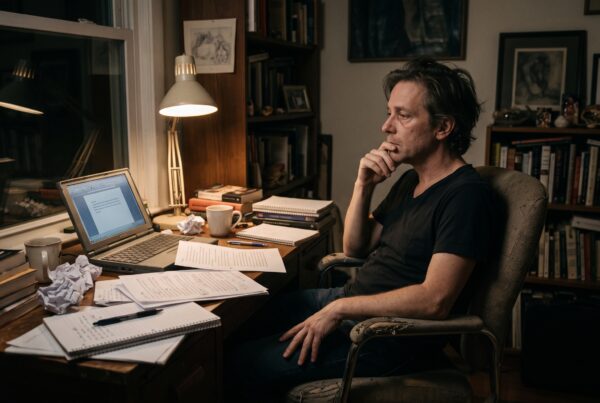
What we usually don’t see online are the hours spent staring at a blinking cursor, rewriting the same paragraph fifteen times, questioning whether the story makes sense, or juggling writing with a full-time job.
Many indie authors are balancing:
- careers
- parenting
- caregiving
- mental health struggles
- chronic illness
- financial pressure
- burnout
- demanding schedules
Writing often happens late at night, during lunch breaks, or in exhausted bursts between responsibilities.
The truth is that most books are not written in a picturesque cabin in the woods. They are written in the middle of ordinary life.

Most books are written in the middle of ordinary life, not inside perfect aesthetic moments.
Writing the Book Is Only Half the Job
One of the biggest shocks for new authors is realizing that publishing a book requires much more than writing.
The fantasy version of publishing ends at “The End.”
Reality begins there.
After the manuscript comes:
- editing
- formatting
- cover design
- proofreading
- metadata
- ISBNs
- category research
- launch planning
- marketing
- email newsletters
- social media
- review outreach
- website management
Many indie authors unintentionally become full-time content creators, marketers, designers, and small business owners overnight.
This is one reason why so many authors feel overwhelmed after publishing their first book.
We go into publishing because we love storytelling. Then suddenly we are learning SEO, researching keywords, creating reels, and trying to understand Amazon algorithms at 1 a.m.
Tools can help make the process easier, though. Programs like Scrivener help many authors organize large writing projects, notes, and outlines in one place. For authors trying to improve discoverability on Amazon, Publisher Rocket is commonly used for keyword and category research.
But even with helpful tools, publishing still requires significant time and energy that social media rarely shows.

Self-publishing often turns authors into marketers, designers, and business owners overnight.
The Financial Reality Can Be Uncomfortable
Another part of the romanticized author life is the idea that publishing automatically creates passive income.
Sometimes people online make it seem like uploading a book to Amazon instantly generates steady sales forever.
For most indie authors, that simply is not reality.
Many books sell slowly at first. Some books barely sell at all. Some authors spend months — or years — building an audience before they gain traction.
And publishing itself can become expensive if we are not careful.
Professional editing, formatting, cover design, and marketing services all cost money. Hiring freelancers through platforms like Upwork or Fiverr can help authors find affordable support, but those expenses still add up quickly.
Cover design alone can heavily influence whether readers click on a book. Services like Miblart have become popular among indie authors because professionally designed covers often perform far better than DIY designs.
This doesn’t mean authors should spend thousands of dollars immediately.
But it does mean we need realistic expectations.
Most indie authors are building long-term careers, not overnight success stories.

Publishing a quality book often involves far more financial investment than many new authors expect.
Social Media Often Hides the Hard Parts
One of the reasons authors feel discouraged is because online success stories are usually heavily curated.
We see:
- announcement graphics
- book mail
- preorder milestones
- bestseller screenshots
- aesthetic desk photos
- “dream come true” moments
We usually don’t see:
- panic attacks before launches
- low sales months
- negative reviews
- abandoned drafts
- burnout
- comparison spirals
- failed marketing campaigns
- unpaid invoices
- books that took years to finish
The internet naturally highlights visible success.
But publishing careers are often built through invisible consistency.
Many successful authors spent years writing in obscurity before anyone noticed them.

Publishing success online is often heavily curated and rarely shows the difficult moments behind the scenes.author social media reality
The Comparison Trap Is Brutal
The romanticized author life can quietly make us feel like we are failing.
We compare our unfinished manuscript to someone else’s polished launch.
We compare our small audience to authors with viral followings.
We compare our first book to someone else’s tenth.
And because publishing is deeply personal, those comparisons can feel devastating.
This is especially true in the social media era, where we are constantly exposed to everyone else’s highlight reel.
The reality is that publishing timelines are wildly different for everyone.
Some authors succeed quickly. Others build slowly over time. Some authors thrive through niche audiences rather than massive visibility.
A smaller, loyal readership is often more sustainable than chasing constant virality.
Creativity Does Not Always Feel Magical
One of the most damaging myths about authorship is the idea that “real” writers are constantly inspired.
In reality, creativity is often inconsistent.
Some days writing flows naturally. Other days every sentence feels impossible.
There are seasons where we feel deeply connected to our work — and seasons where we question everything we create.
That does not mean we are untalented.
It means we are human.
Many books are completed not through constant inspiration, but through discipline, persistence, revision, and showing up imperfectly.
The romanticized version of writing celebrates inspiration.
The real version often depends on endurance.
There Is Beauty in the Reality
Despite all of this, the real author life still contains something meaningful.
Maybe even more meaningful than the fantasy.
Because the reality includes:
- resilience
- growth
- vulnerability
- creativity despite fear
- connection with readers
- building something slowly over time
The reality is finishing a chapter even when we are tired.
The reality is revising a manuscript because we care enough to improve it.
The reality is hearing from one reader who says our story mattered to them.
And we think that may be more rewarding than the aesthetic version ever was.

The real reward of authorship is often found in persistence, growth, and meaningful reader connection.
Final Thoughts
The romanticized author life is not completely fake.
But it is incomplete.
The cozy desks, coffee shops, annotated manuscripts, and beautiful book covers are only one small piece of the picture.
Behind every published book is usually a person navigating uncertainty, self-doubt, exhaustion, learning curves, and persistence.
And maybe that is what makes authorship meaningful in the first place.
If you are currently somewhere between the fantasy and the reality of becoming an author, you are not alone. Most of us are figuring it out as we go.
And that messy, imperfect process is far more normal than social media would ever make us believe.
You can also explore more publishing and author resources on TrailHawk Publishing’s blog or browse books through TrailHawk Publishing’s Bookshop storefront.
Our Affiliate Links:
- Miblart – cover designs and other services
- Bookshop – curated book lists
- Scrivener – writing workflow
- Fiverr – find freelance talent
- Book Bolt – keyword search
- Publisher Rocket – keyword/category search
Our Referral Links:
- Upwork – more freelance talent
- Printful – print-on-demand merch
- Creative Fabrica – fonts and images
Join our community! Follow @TrailHawkPublishing for publishing tips and behind-the-scenes updates: