
Disclosure: If you click any of our affiliate links and make a purchase, we will earn a commission (at no extra cost to you).
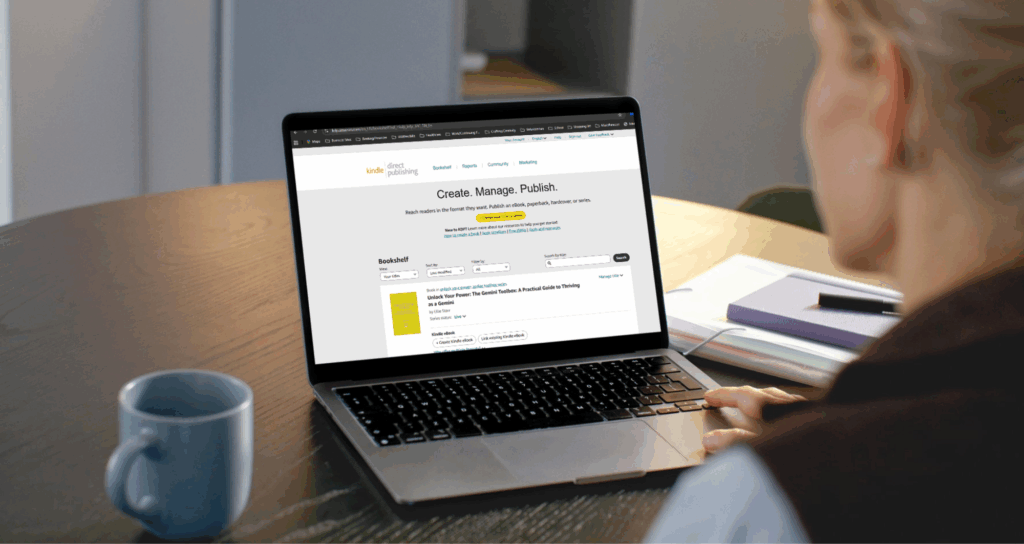
Self-publishing on Amazon KDP taught me more than any YouTube tutorial or blog article ever could. I walked into the process thinking, “How complicated can it be? I upload my book and click publish.” I laugh now, in the most loving way, because the reality is… self-publishing is a full journey. A challenging one, a rewarding one and a deeply empowering one.
Looking back, I do not regret a single step. Even the mistakes became lessons that made me a better author and a more intentional publisher. So I want to share what I learned with you, not as an expert perched on a pedestal but as someone who has been exactly where you are: hopeful, overwhelmed, excited and unsure.
Let’s walk through this together.
Lesson 1: Writing the Book Is Only the Beginning
Here is the truth no one warned me about: finishing your manuscript does not mean you are even halfway done. When I typed “The End,” I expected to feel complete. Instead, I realized there were about ten more mountains to climb.
Editing, formatting, layout, file conversions, cover design and metadata all suddenly became part of my daily vocabulary. I found myself Googling things like “bleed vs no bleed” and “how big should margin gutters be.” There were moments I wanted to quit, and then other moments where seeing my manuscript transform into a real, formatted book felt magical.
And if you are wondering, yes, Grammarly did deny my affiliate application, which still makes me laugh a little. But that did not stop me from using every tool and resource I could find to refine my writing.
Lesson 2: ISBNs Matter More Than You Think
This one surprised me the most.
When I first started, I did what most new authors do: I grabbed the free ISBN from Amazon KDP and kept it moving. Later, I learned how big that choice actually was.
If you are publishing in the U.S., Bowker is the official agency that sells ISBNs. Not Amazon, not any reseller, not any “discount ISBN” website (please avoid those). Bowker is the only legitimate U.S. source.*
And Bowker does far more than just sell ISBNs. They also offer author services like:
-
Editing
-
Ebook file conversion
-
Metadata optimization
-
Book2Look, which is one of their marketing tools that creates a digital “look inside” preview you can share anywhere online
-
Marketing add-ons to help authors increase visibility
I did not realize how much Bowker actually provides until I started exploring their dashboard and the services they offer. If you plan to build a brand, create multiple books or distribute beyond Amazon, you will eventually want your own ISBNs with your imprint name on them.
Lesson 3: Metadata Is NOT Just a Technical Step!
Keywords, categories, descriptions, titles and subtitles… these are not filler fields. They shape how Amazon understands your book and how readers find it.
Choosing keywords was more emotional than I expected. I had to ask myself, “What would someone type if they needed a book like mine?” That kind of empathy becomes a marketing tool.
I also have affiliate links for Bookbolt and Publisher Rocket, and these tools make keyword and category research a thousand times easier!
But even without the tools, here is what I realized: your metadata is your book’s digital fingerprint. It deserves time and care.
Lesson 4: Covers Matter More Than We Want to Admit
There is a special kind of heartbreak that comes from designing a cover you love and then realizing it looks terrible as a thumbnail.
KDP shoppers scroll fast. You get maybe two seconds of attention. Your cover needs to be:
-
Clear
-
Genre appropriate
-
Readable at the smallest sizes
I used Canva to draft concepts, play with fonts and test visibility. Your cover does not have to be complicated. It just has to communicate the right message instantly.
This lesson I am still learning, but let’s learn together, Nestlings!
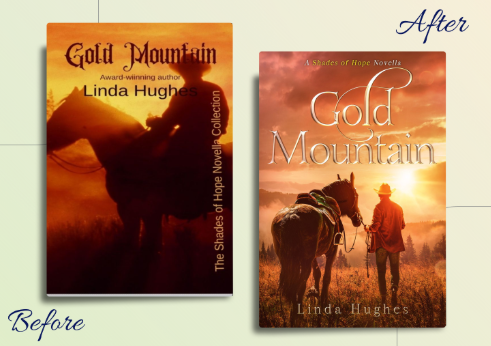
A book cover with poor font choice vs. the redesigned cover
The example above shows how making changes in the typography on the book cover makes a huge difference! If you need help with your book cover design or redesign, you should check out MiblArt. Click the photo to take you to their blog post on cover design mistakes. They also offer help with logos and branding, book formatting and layout, marketing, and author swag design!
Lesson 5: Amazon KDP Is Simple… Until It Isn’t
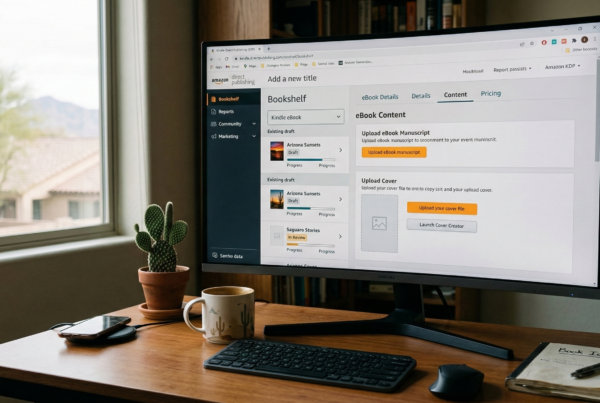
The dashboard looks straightforward, but behind every step is a decision that affects your final product.
Trim size affects page count.
Page count affects print cost.
Print cost affects royalties.
Margins affect readability.
Paper color affects mood and aesthetic.
I went through several rounds of uploading, checking, adjusting, reformatting and uploading again. Ordering a proof copy saved me from releasing a book with text that was too close to the inner margin.
If you take nothing else from this post, let it be this: order the proof copy.
Lesson 6: Marketing Needs to Start Before You Hit Publish
This one took me a while to embrace. I used to think talking about my book before it was done was “too early.” I did not want to annoy people or hype something I might change later.
But readers love the journey.
Behind-the-scenes snapshots, quotes, drafting moments, cover reveals, formatting struggles… these create anticipation and connection. And honestly, connection sells books far more than a perfect marketing strategy.
Pinterest is one of the best long-term platforms for authors, because pins can bring traffic for months or even years!
Email marketing is another foundational tool. I use MailerLite (not an affiliate), and it has been simple and reliable.
Lesson 7: Pricing Is More Strategic Than Emotional
My first instinct was to price my books based on what felt “reasonable.” But pricing is not emotional. It is mathematical and psychological.
- Too cheap signals low value.
- Too high discourages new readers.
- Your royalty structure changes depending on print cost.
I had to learn to detach from emotion and look at the reality of distribution, competition and genre norms.
Lesson 8: Reviews Are the Lifeblood of an Indie Author
Reviews influence ranking, conversion and visibility. They signal to Amazon that your book is actively being read and engaged with.
But asking for reviews can feel intimidating. I learned to simply be honest with readers: reviews help me continue writing and publishing more books. Most people appreciate transparency.
Lesson 9: You Will Make Mistakes and That Is Part of the Process
There is no perfect self-published book. Even major publishing houses release books with typos.
You will learn by doing.
You will learn by fixing.
You will learn by trying again.
Self-publishing is one long experiment, and every book you release teaches you something new.
Lesson 10: You Must Think Like an Author and a Business Owner
Whether you publish one book or a whole catalog, the moment you hit “publish,” you have created a product. And that product lives inside a business ecosystem.
Track your earnings.
Track your expenses.
Plan your releases.
Build your brand presence.
Treat your writing like a real job, because it is.
It took me a while to embrace this mindset, but once I did, everything changed.
*Members of the Independent Book Publishers Association (IBPA) can receive a 15% discount on ALL products and services sold directly on MyIdentifiers.com.
Our Affiliate Links:
- Miblart – cover designs and other services
- Bookshop – curated book lists
- Scrivener – writing workflow
- Fiverr – find freelance talent
- Book Bolt – keyword search
- Publisher Rocket – keyword/category search
Our Referral Links:
- Upwork – more freelance talent
- Printful – print-on-demand merch
- Creative Fabrica – fonts and images
Join our community! Follow @TrailHawkPublishing for publishing tips and behind-the-scenes updates:



Good info!
Hello! Thank you for your comment!
Your point of view caught my eye and was very interesting. Thanks. I have a question for you.
Hello! Thank you for your comment! How can we help you? Please submit an inquiry on our contact page, and a member of our team will reply as soon as possible.
Thanks for sharing. I read many of your blog posts, cool, your blog is very good.
Thank you very much!
Thank you for your sharing. I am worried that I lack creative ideas. It is your article that makes me full of hope. Thank you. But, I have a question, can you help me?
Thanks! How can we help?
Thank you for your sharing. I am worried that I lack creative ideas. It is your article that makes me full of hope. Thank you. But, I have a question, can you help me?
Your point of view caught my eye and was very interesting. Thanks. I have a question for you.
Thanks for sharing. I read many of your blog posts, cool, your blog is very good.
Thank you so much!
I don’t think the title of your article matches the content lol. Just kidding, mainly because I had some doubts after reading the article.
What doubts do you have? We are happy to assist!
Thank you for your sharing. I am worried that I lack creative ideas. It is your article that makes me full of hope. Thank you. But, I have a question, can you help me?
Thank you for your sharing. I am worried that I lack creative ideas. It is your article that makes me full of hope. Thank you. But, I have a question, can you help me?