
Disclosure: If you click any of our affiliate links and make a purchase, we will earn a commission (at no extra cost to you).

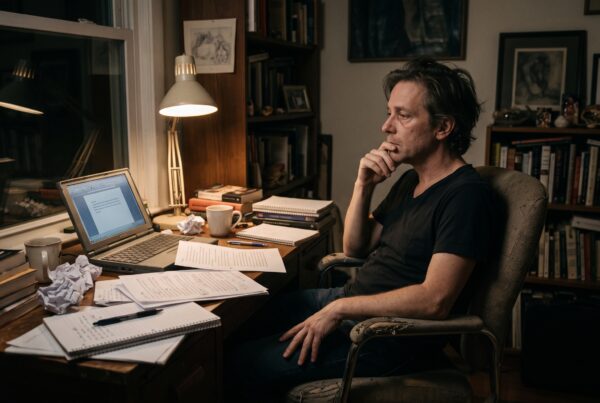
Every writer develops a unique voice shaped by experience, interests, and creative preferences.
Every writer has a unique voice.
Even when two authors write within the same genre, tackle similar themes, or follow the same storytelling conventions, their work often feels completely different. Some writers create vivid descriptions that immerse readers in every detail. Others favor concise prose that moves quickly from one scene to the next. Some writers excel at dialogue, while others shine through introspection and emotional depth.
At TrailHawk Publishing, we believe writing style is one of the most fascinating aspects of storytelling because it reveals something about the writer behind the words.
While writing style cannot diagnose your personality, predict your future, or place you neatly into a specific category, it can offer interesting clues about your creative preferences, strengths, and natural tendencies.
If you’ve ever wondered what your writing style says about you, let’s take a closer look.
If You Love Rich Description, You May Be Highly Observant
Do your manuscripts contain detailed settings, sensory descriptions, and immersive world-building?
Writers who naturally gravitate toward descriptive prose often pay close attention to their surroundings. You may notice visual details, emotional nuances, environmental cues, and subtle shifts in atmosphere that others overlook.
Readers often feel transported into your stories because you enjoy creating a complete experience rather than simply reporting events.
Descriptive writers frequently:
- notice small details
- enjoy visual storytelling
- appreciate aesthetics
- value atmosphere
- spend time observing people and places
One challenge descriptive writers sometimes face is pacing. If you find yourself spending several paragraphs describing a room before the story advances, you may need to balance immersion with momentum.
This is one reason many authors use organizational tools like Scrivener to review scene structure and pacing more effectively during revisions.

Observation and attention to detail often influence descriptive writing styles.
If Your Writing Is Fast-Paced, You Probably Value Efficiency
Some writers prefer direct, streamlined prose.
You may write shorter chapters, move quickly through scenes, and focus heavily on action, conflict, and progression.
Fast-paced writers often:
- prioritize clarity
- dislike unnecessary filler
- enjoy keeping readers engaged
- focus on forward momentum
- value efficiency in communication
Readers frequently describe this style as “easy to read” because the story moves quickly.
Thrillers, suspense novels, and many contemporary genres often benefit from this approach.
If this sounds like your style, you may enjoy our article, “How Long Should a Book Chapter Be?” where we discuss how pacing and chapter structure influence the reader experience.
If Dialogue Comes Naturally To You, You May Be People-Focused
Some writers can create memorable conversations almost effortlessly.
If dialogue is one of your strengths, you may be especially interested in:
- human behavior
- relationships
- communication
- conflict resolution
- emotional dynamics
Dialogue-heavy writers often spend time listening to how people actually speak.
You may enjoy observing conversations in everyday life, studying speech patterns, or paying attention to how different personalities express themselves.
Strong dialogue can make characters feel authentic because readers experience them directly through their words rather than through narration alone.

Great dialogue writers frequently study human interaction and speech patterns.
If You Write Emotionally, You May Be Highly Empathetic
Certain writers naturally focus on emotions, internal thoughts, and personal transformation.
Your stories may spend significant time exploring:
- motivations
- fears
- hopes
- relationships
- personal growth
Readers often connect deeply with emotionally driven stories because they recognize aspects of themselves in the characters.
Writers who emphasize emotional depth frequently possess strong empathy and curiosity about what motivates people.
This does not necessarily mean you are emotional all the time. It simply means you find human experiences compelling enough to explore them in depth.
If You Love Complex World-Building, You May Enjoy Systems and Patterns
Fantasy, science fiction, and speculative fiction writers often create intricate worlds filled with rules, histories, cultures, and systems.
If you enjoy world-building, you may naturally enjoy:
- problem-solving
- organization
- research
- planning
- connecting ideas
Many world-builders enjoy constructing detailed frameworks that support their stories.
This often extends beyond fiction. You may enjoy learning how real-world systems function, whether those systems involve history, politics, economics, science, or culture.
Because world-building generates large amounts of information, many authors use organizational software and research databases to keep track of their ideas during the drafting process.

Complex fictional worlds often begin with extensive planning and research.
If You Constantly Revise, You May Have High Standards
Some writers draft quickly and edit later.
Others revise every paragraph repeatedly before moving forward.
If you frequently revise your work, it may indicate that:
- you care deeply about quality
- you pay attention to details
- you value precision
- you hold yourself to high standards
These traits can be valuable.
However, excessive revision can also become a form of perfectionism.
We explored this challenge in our article, “Why So Many Writers Never Finish Their First Book,” where we discussed how perfectionism often prevents writers from completing manuscripts.
A strong writing style develops through practice, revision, and experience. It does not require perfection from the beginning.
If You Prefer Minimalist Writing, You May Trust Your Readers
Minimalist writers often use fewer words while still creating powerful emotional impact.
This style typically relies on:
- subtext
- implication
- concise language
- reader interpretation
Minimalist authors often trust readers to connect the dots without extensive explanation.
You may enjoy allowing readers to discover meaning on their own rather than guiding them through every detail.
This approach can create memorable stories because readers become active participants in the experience.
Your Writing Style Evolves Over Time
One of the most important things to remember is that writing style is not fixed.
Many authors look back at early manuscripts and discover their style has changed dramatically.
As writers gain experience, they often:
- strengthen their voice
- improve pacing
- become more confident
- experiment with techniques
- refine what feels natural
Reading widely also influences development.
Many writers annotate books, study favorite authors, and analyze storytelling techniques to strengthen their own craft. If you enjoy active reading, you may appreciate our article, “Why Readers Love Annotating Books,” which explores how annotation helps readers engage more deeply with stories and writing techniques.
Growth is a normal part of the creative process.

Every draft helps writers strengthen and refine their voice.
The Books You Read Influence The Way You Write
Every writer is shaped by the stories they consume.
The books you read expose you to:
- sentence structures
- pacing techniques
- dialogue styles
- narrative voices
- storytelling approaches
This is one reason reading remains one of the most effective ways to improve as a writer.
If you’re looking to expand your reading list, consider browsing our curated recommendations through our Bookshop storefront. Supporting independent bookstores while discovering new authors can introduce you to styles and perspectives you may never have encountered otherwise.
The broader your reading experience becomes, the more tools you gain as a writer.
Style Is About Authenticity, Not Imitation
Many new writers spend years trying to sound like someone else.
They imitate bestselling authors, mimic popular trends, or chase whatever style seems successful at the moment.
While learning from other writers is valuable, your strongest work usually emerges when your natural voice begins to take shape.
Readers are often drawn to authenticity.
Your writing style reflects:
- what interests you
- what you notice
- what you value
- how you think
- how you communicate
No two writers will express ideas in exactly the same way.
That uniqueness is one of the greatest strengths you bring to your work.
Final Thoughts
Your writing style offers clues about your creative tendencies, interests, and strengths, but it should never be viewed as a limitation.
Descriptive writers, minimalist writers, emotional writers, dialogue-driven writers, and world-builders all contribute something valuable to the literary landscape.
At TrailHawk Publishing, we encourage writers to embrace their natural voice while continuing to develop their skills through reading, writing, revision, and experimentation.
The goal is not to fit into a specific category, but to become the strongest version of your own unique writing style.
When readers connect with your work, they are often connecting with the perspective, curiosity, and creativity that only you can bring to the page.
That is something no writing trend can replace.

Your writing style becomes stronger when you focus on authenticity rather than imitation.
Our Affiliate Links:
- Miblart – cover designs and other services
- Bookshop – curated book lists
- Scrivener – writing workflow
- Fiverr – find freelance talent
- Book Bolt – keyword search
- Publisher Rocket – keyword/category search
Our Referral Links:
- Upwork – more freelance talent
- Printful – print-on-demand merch
- Creative Fabrica – fonts and images
Join our community! Follow @TrailHawkPublishing for publishing tips and behind-the-scenes updates: