Disclosure: If you click any of our affiliate links and make a purchase, we will earn a commission (at no extra cost to you).

Great writing is only one part of building a successful self-publishing career.
One of the biggest misconceptions about self-publishing is that a great book will naturally find its audience.
We wish it worked that way.
At TrailHawk Publishing, we love seeing authors pour months or even years into crafting compelling stories, polishing every sentence, and creating books they are proud to publish. Great writing is absolutely important, but it is only one piece of the publishing puzzle.
Every year, well-written self-published books quietly disappear while books with average writing sometimes become commercial successes. That can feel frustrating, especially if you’ve invested significant time, money, and energy into your manuscript.
The reality is that publishing is both a creative endeavor and a business. Writing a strong book gives you a solid foundation, but success also depends on discoverability, presentation, audience expectations, and marketing.
If your book isn’t selling the way you hoped, it does not automatically mean the writing is poor. There are many reasons a quality book can struggle to gain traction.
Let’s explore some of the most common ones.
Readers Have To Find Your Book First
The best book in the world cannot generate sales if readers never discover it.
One of the biggest challenges for self-published authors is visibility.
Unlike traditionally published books that may receive bookstore placement, media coverage, or publisher-driven promotion, independent authors are largely responsible for helping readers find their books.
Discoverability depends on several factors, including:
- relevant keywords
- accurate categories
- compelling metadata
- advertising
- social media presence
- email marketing
- word of mouth
Many successful indie authors spend almost as much time learning marketing as they do learning to write.
Research tools like Publisher Rocket can help identify competitive Amazon categories and keywords that improve discoverability. For authors creating low-content books, journals, or activity books, BookBolt can simplify niche research and interior design. If you decide to try BookBolt, you can also save 20% with the discount code TRAILHAWK.

Strong discoverability begins with thoughtful keyword and category research.
Your Cover Creates the First Impression
Readers absolutely judge books by their covers.
That is not unfair. It is simply how people make purchasing decisions.
A professionally designed cover immediately communicates:
- genre
- tone
- audience
- professionalism
- quality
If your cover looks outdated or amateurish, potential readers may never click your book description, regardless of how well the book is written.
Professional cover designers understand typography, color psychology, composition, genre expectations, and current publishing trends.
If design is not your strength, working with professionals can make a significant difference. Services like Miblart specialize in book cover design for indie authors, while freelancers on Fiverr and Upwork offer a wide range of publishing services.
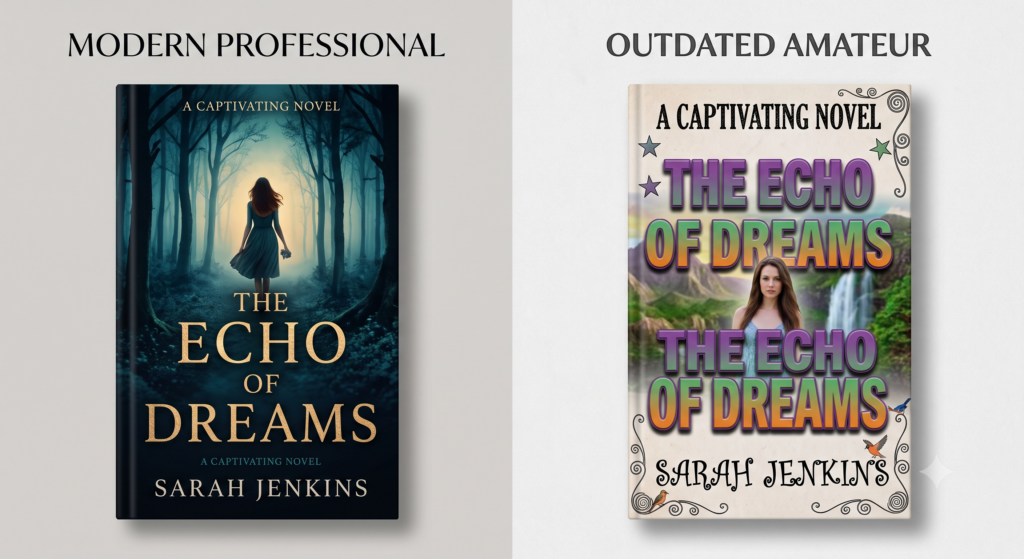
Your cover is often the first opportunity to capture a reader’s attention.
Your Book May Be Reaching the Wrong Audience
Sometimes a book performs poorly simply because it is being shown to the wrong readers.
For example, a cozy mystery marketed like a psychological thriller may disappoint readers who expected something entirely different.
Likewise, fantasy readers have different expectations than romance readers, and nonfiction readers often search using completely different keywords than fiction readers.
Successful marketing begins with understanding who your ideal reader is.
Ask yourself:
-
Who would genuinely enjoy this book?
-
What problems does this book solve?
-
What emotions does it create?
-
Which comparable books would my readers already enjoy?
The clearer your audience becomes, the easier every marketing decision becomes.
Your Book Description Is Not Selling the Story
Many authors spend months writing a manuscript but only fifteen minutes writing the product description.
Unfortunately, the description plays a major role in whether readers click the “Buy” button.
A strong description should:
- introduce the premise quickly
- create curiosity
- highlight benefits or stakes
- match your genre
- encourage readers to continue
Think of your description as your book’s sales page.
Its purpose is not to summarize every plot point.
Its purpose is to persuade the right reader to keep reading.
Reviews Build Trust
Readers often hesitate to purchase books with few or no reviews.
Reviews provide social proof that reassures potential buyers.
This creates one of the biggest challenges for new authors.
You need readers to earn reviews, but many readers want reviews before purchasing.
Building an advance review team, encouraging honest feedback, and networking with readers can gradually help establish credibility over time.
Remember that genuine reviews matter far more than large quantities of low-quality or manipulated feedback.
Publishing Without Professional Editing
Even talented writers benefit from professional editing.
Developmental editors, copy editors, and proofreaders each focus on different aspects of the manuscript.
Small issues such as grammar mistakes, inconsistent formatting, repetitive wording, or pacing problems can affect reader satisfaction.
Hiring experienced freelancers through platforms like Upwork or Fiverr allows authors to strengthen their books before publication.
Editing is an investment in your readers’ experience.

Editing improves clarity, consistency, and the overall reader experience.
Poor Formatting Can Hurt Reader Confidence
Formatting often goes unnoticed when done well.
When done poorly, readers notice immediately.
Common formatting problems include:
- inconsistent spacing
- oversized margins
- unusual fonts
- broken paragraph styles
- confusing chapter layouts
- ebook formatting errors
A clean reading experience helps readers stay immersed in your content.
Many authors use tools like Scrivener during drafting because it makes organizing large manuscripts much easier before final formatting.
Marketing Cannot End on Launch Day
Many new authors pour tremendous energy into launch week.
Then they stop marketing.
Books often continue selling for years after publication because authors continue introducing them to new readers.
Long-term marketing might include:
- blogging
- Pinterest marketing
- newsletters
- podcast interviews
- speaking engagements
- book promotions
- seasonal campaigns
Consistent visibility often outperforms short bursts of intense promotion.

Consistent visibility helps books reach new readers over time.
Reader Expectations Continue to Change
Publishing trends evolve.
Cover styles change.
Popular tropes shift.
Reader preferences develop over time.
This does not mean chasing every trend.
However, remaining aware of your market helps you make informed publishing decisions.
Reading widely within your genre and studying successful books can reveal patterns that readers currently enjoy.
You can discover new books while supporting independent bookstores through our curated recommendations on Bookshop.
Success Rarely Happens Overnight
One of the most overlooked truths about self-publishing is that success often takes time.
Many authors publish several books before building consistent readership.
Each release expands your catalog.
Each reader introduces new opportunities for recommendations.
Each lesson improves future projects.
We explored the importance of persistence in our article, “Why So Many Writers Never Finish Their First Book,” where we discussed how consistency often matters more than perfection.
Similarly, our article “The Romanticized Author Life vs Reality” examines why publishing success usually looks much different than the version portrayed on social media.
Building an author career is often measured in years rather than weeks.
Think Like Both an Author and a Publisher
Successful independent authors wear multiple hats.
You are not only writing.
You are also making decisions about:
- branding
- marketing
- pricing
- metadata
- customer experience
- cover design
- advertising
- long-term strategy
Viewing your book through both creative and business lenses helps you identify opportunities for improvement that have nothing to do with the quality of your writing.
Every book teaches something new.
Every launch provides valuable data.
Every project makes the next one stronger.
Final Thoughts
If your self-published book has not performed as well as you hoped, do not immediately assume the writing is the problem.
Many excellent books struggle because readers never discover them, the cover fails to attract attention, the marketing reaches the wrong audience, or the book lacks the professional presentation readers expect.
At TrailHawk Publishing, we encourage authors to view publishing as an ongoing learning process rather than a single event.
Strong writing will always matter.
But pairing strong writing with thoughtful publishing decisions gives your book the greatest opportunity to find the readers it was written for.
Every successful author starts somewhere, and every new book gives you another opportunity to grow your skills, expand your audience, and build a publishing career that lasts.
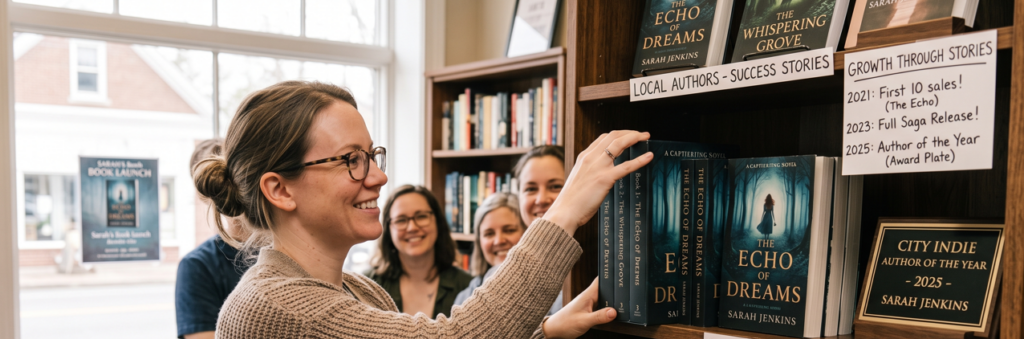
Sustainable publishing success is built one book at a time.
Our Affiliate Links:
- Miblart – cover designs and other services
- Bookshop – curated book lists
- Scrivener – writing workflow
- Fiverr – find freelance talent
- Book Bolt – keyword search
- Publisher Rocket – keyword/category search
Our Referral Links:
- Upwork – more freelance talent
- Printful – print-on-demand merch
- Creative Fabrica – fonts and images
Join our community! Follow @TrailHawkPublishing for publishing tips and behind-the-scenes updates: