
Disclosure: If you click any of our affiliate links and make a purchase, we will earn a commission (at no extra cost to you).
When authors talk about marketing, email newsletters tend to spark strong reactions. Some writers swear by them. Others avoid them completely, convinced that email is outdated or intrusive. At TrailHawk Publishing, we hear this question often: do authors really need an email newsletter?
The short answer is no, you can publish without one. The longer and more honest answer is that an email newsletter is one of the most reliable tools an author can use to build long-term stability, reader trust, and independence from constantly changing platforms.
This post explores what newsletters actually do for authors, when they make sense, and when they might not be the right fit.

What an Email Newsletter Really Is
An email newsletter is not a sales funnel in disguise. At its best, it is a direct line of communication between author and reader. It allows us to speak to people who have actively chosen to hear from us.
Unlike social media, email lists are not controlled by algorithms. Messages land directly in inboxes. There is no fighting for reach or hoping a post gets seen before it disappears.
This level of ownership matters, especially for self-published authors. In our post How Authors Can Use Social Media to Sell More Books, we talk about the limits of platform driven visibility. Email helps balance that risk.
Why Email Still Works in a Social Media World
Email has lasted because it works.
Readers check their inbox daily. Email allows for longer form communication, storytelling, and context that social platforms often discourage. It also allows authors to guide readers toward actions like leaving reviews, joining launches, or downloading bonuses.
We have seen email lists support:
-
Book launches
-
Review requests
-
Preorders
-
Event announcements
-
Reader engagement between releases
When paired with content marketing, such as blog posts hosted on trailhawkpublishing.com/blog, email becomes a way to bring readers back to your ecosystem rather than chasing attention elsewhere.
The Biggest Misconception About Author Newsletters
Many authors believe they must send frequent emails to justify having a list. This belief stops many people from starting.
In reality, consistency matters more than frequency. A monthly email can be just as effective as a weekly one if the content is intentional. Some authors send newsletters only during launches or major updates.
There is no universal rule. The right cadence depends on your writing schedule, your energy, and your audience.
What Authors Can Actually Send in a Newsletter
If the idea of emailing feels awkward, it is often because authors assume every message must sell something. That is not the case.
Useful newsletter content includes:
-
Behind the scenes updates
-
Writing reflections
-
Early cover reveals
-
Excerpts or bonus content
-
Links to new blog posts
-
Reader questions or responses
For example, an author might share a short reflection and link readers to The Power of Reviews: How Readers Help Authors Thrive as a gentle reminder of how readers can support the work.
Newsletters and Book Launches
Email becomes especially powerful during launches.
Social posts are easy to miss. Emails are more direct. Subscribers are often your most engaged readers, which makes them ideal for:
-
Early announcements
-
ARC recruitment
-
Review reminders
-
Limited time bonuses
In Top 10 Lessons I Learned from Self-Publishing on Amazon KDP, we discuss how preparation matters more than timing. Email allows you to prepare readers instead of surprising them.
How Newsletters Support Reviews and Visibility
Reviews are essential to discoverability, but asking for them can feel uncomfortable. Email makes this easier.
A thoughtful email explaining why reviews matter, paired with a direct link, feels more personal than a public post. This complements the strategies shared in How to Ask for Reviews Without Feeling Awkward.
Readers who join your email list are more likely to leave reviews because they already feel connected to you and your work.
Tools That Make Email Easier for Authors
You do not need advanced tech skills to start an email newsletter. Many authors begin with simple templates and grow over time.
Writing tools like Scrivener can help you draft longer emails or repurpose content from blog posts. Freelancers on Fiverr or Upwork can assist with email setup, templates, or copy polishing if needed.
Lead magnets such as checklists, guides, or bonus content can help grow your list organically. These can be delivered through email without constant promotion.
When an Email Newsletter Might Not Be Right Yet
An email newsletter is not mandatory at every stage.
You may want to delay starting one if:
-
You are still drafting your first book
-
You dislike email communication entirely
-
You do not have time to maintain even occasional updates
That said, starting early gives you room to grow slowly. A small list of engaged readers is more valuable than a large list built too quickly.
Email and Long-Term Author Independence
One of the strongest arguments for email newsletters is independence.
Social platforms change.
Algorithms shift.
Accounts get throttled or lost.
An email list remains yours.
This is especially important for authors building multiple projects, whether that includes journals, workbooks, or companion products. If you expand into merchandise or reader resources using services like Printful, email becomes a natural place to share those updates without relying on ads.

So Do Authors Really Need a Newsletter?
We believe email newsletters are not about obligation. They are about opportunity.
An email list gives authors control, consistency, and connection. It supports launches, reviews, and long term visibility in ways few other tools can.
You do not need to start big. You do not need to email often.
You simply need to show up honestly when you do.
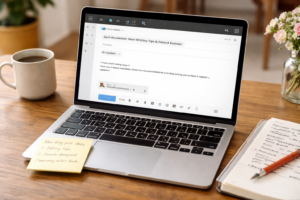
For authors serious about building a sustainable publishing path, email is less about marketing and more about relationship building. Below is a sample welcome email authors can use:
Hello and welcome,
We’re really glad you’re here.
By joining this list, you’ve officially stepped into a space created for authors who want clarity, honesty, and practical guidance on the self-publishing journey. Whether you are still drafting your first manuscript or navigating your next launch, you belong here.
At TrailHawk Publishing, we talk openly about what publishing actually looks like. The wins, the mistakes, the learning curves, and the quiet progress that often happens behind the scenes. You’ll receive insights on writing, publishing, marketing, and building a sustainable author path without the fluff or false promises.
Here’s what you can expect from us:
• Transparent publishing lessons
• Practical tools and resources for authors
• Behind the scenes looks at real publishing decisions
• Occasional updates on new guides, books, and opportunitiesYou won’t hear from us every day. When we send an email, it’s because we have something useful, encouraging, or timely to share.
If you haven’t already, we recommend starting with the blog at TrailHawkPublishing.com/blog. It’s where we share in-depth posts on topics like self-publishing mistakes, marketing on a budget, keyword research, reviews, and building an author platform that lasts.
And one more thing. This journey can feel isolating at times. If you ever feel behind, uncertain, or overwhelmed, know that you are not alone. Every author you admire once stood exactly where you are now.
Thank you for being here. We’re excited to walk this part of the journey with you.
Warmly,
TrailHawk PublishingP.S. Feel free to reply to this email and tell us what you’re working on. We read every message.
If you want to explore how email fits into a broader publishing strategy, we recommend reading:
All are available at trailhawkpublishing.com/blog.
Our Affiliate Links:
- Miblart – cover designs and other services
- Bookshop – curated book lists
- Scrivener – writing workflow
- Fiverr – find freelance talent
- Book Bolt – keyword search
- Publisher Rocket – keyword/category search
Our Referral Links:
- Upwork – more freelance talent
- Printful – print-on-demand merch
- Creative Fabrica – fonts and images
Join our community! Follow @TrailHawkPublishing for publishing tips and behind-the-scenes updates: