Disclosure: If you click any of our affiliate links and make a purchase, we will earn a commission (at no extra cost to you).
Choosing the perfect book cover is one of the most important decisions you will make as an author. It is also one of the most misunderstood. Many new writers assume the story alone will carry the book, but in reality, readers always judge a book by its cover. They do it quickly, often within a single second. A polished, genre appropriate, emotionally resonant cover signals professionalism, communicates genre expectations, and builds trust with your audience before they ever read a word.
This post walks you through exactly how to choose the right cover for your book, whether you are publishing your first journal, your fifth novel, or your next nonfiction project. We will also share before and after examples, links to trusted designers, and budget friendly options for authors who want quality without overspending.
Why Your Book Cover Matters More Than You Think
Your book cover performs several key functions:
-
It tells readers what genre your book is
-
It evokes an emotion that matches your story
-
It signals quality and professionalism
-
It builds trust
-
It grabs attention in crowded marketplaces like Amazon
-
It sets expectations for tone, themes, and style
An eye catching cover sells more books. A weak or confusing cover can bury a strong story. This is why many designers and marketing experts say your book cover is your first ad.
There are entire blog posts dedicated to this topic, and one we recommend is the Miblart article on choosing the right book cover. They break down common cover design mistakes authors make and explain how genre plays a huge role in design. While this post will be similar in theme, everything here is original and tailored to your needs as an indie author and TrailHawk Publishing reader.
Understanding Genre Signals
One of the biggest mistakes authors make is choosing a cover they personally love instead of one their readers expect. Your genre has visual cues that let readers immediately understand the type of experience your book offers.
For example:
-
A cozy romance may use soft colors, handwritten fonts, and warm imagery.
-
A fantasy novel might use bold serif fonts, glowing elements, or illustrated characters.
-
A guided journal like Healing Her or Healing Him often uses calm, clean, minimalistic covers with soothing color palettes.
-
A thriller usually uses sharp lines, high contrast, and bold lettering.
When you ignore genre norms…
…readers get confused.
Confusion leads to hesitation, and…
…hesitation leads to lost sales.
The Psychology of Color and Typography
Your cover design should also consider psychology. Colors trigger emotions. Fonts suggest tone. When a reader sees your cover, they should feel what your book is about.
Some examples:
-
Blues and greens for calm, healing, reflection
-
Reds for urgency, passion, or danger
-
Gold and purple for luxury or mystical themes
-
Black and white minimalism for modern nonfiction
-
Pastels for soft romance or self love themes
Typography matters too. Smooth handwritten fonts convey warmth. Bold sans serif fonts communicate power or seriousness. Elegant serif fonts often fit literary fiction or historical genres.
Before and After Example 1: A Fictional Self Help Journal Cover

Left side: A flat, poorly designed mock cover with mismatched fonts, low contrast, and unrelated imagery.
Right side: A clean, professional cover with cohesive colors, high contrast title text, and genre appropriate design.
This before and after helps readers visually understand how a cover sets expectations. The “before” version looks homemade and unclear. The “after” version looks trustworthy and aligned with self healing themes.
Before and After Example 2: A Fictional Fantasy Novel Cover

Left side: Basic stock photo with text placed over it.
Right side: Professionally composed illustration, atmospheric lighting, and custom typography.
Even if you do not write fantasy, the transformation shows how dramatically a well designed cover elevates a book’s presence.
Working with Professional Cover Designers
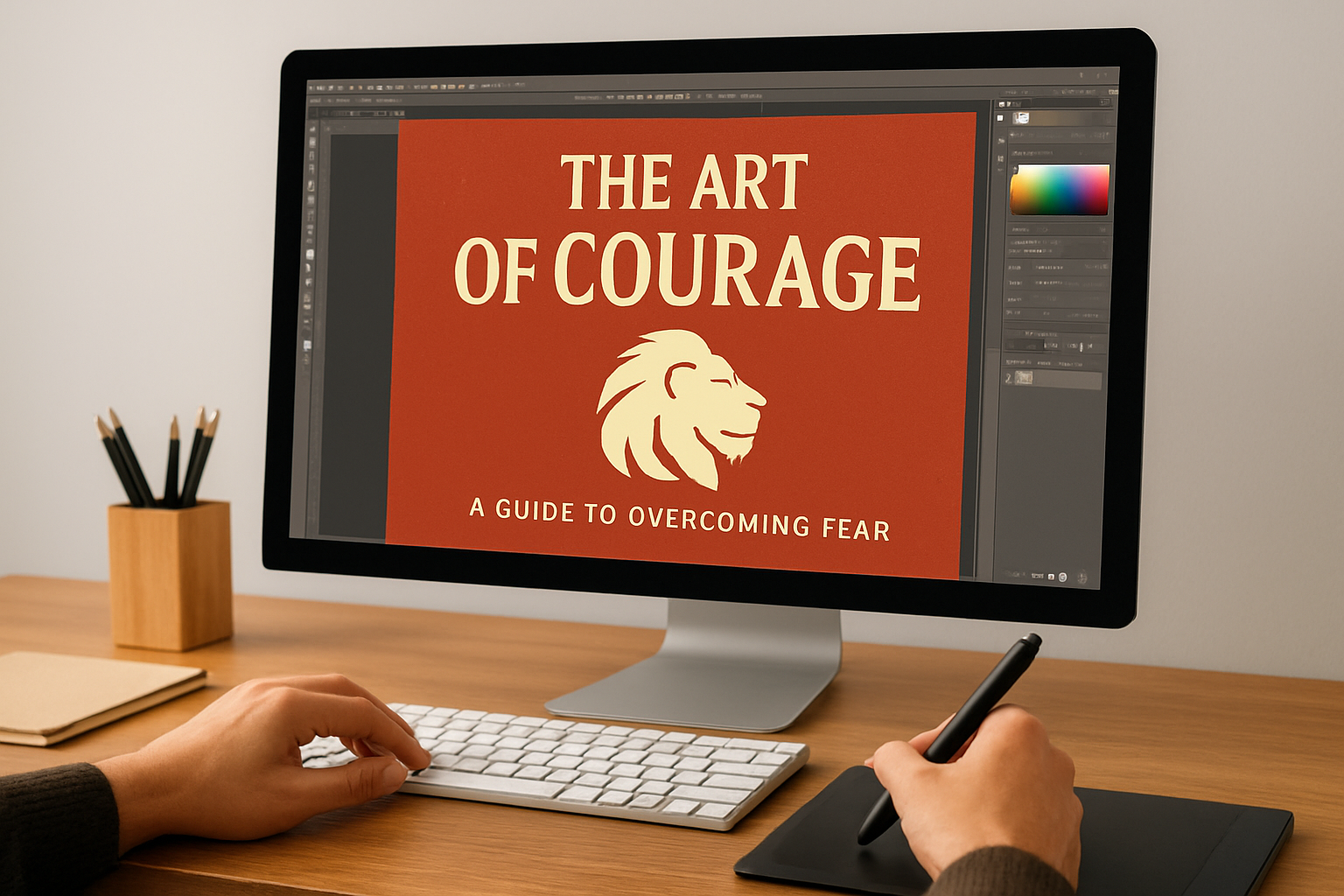
Hiring a professional designer is one of the best investments you can make as an author. A great designer does more than create something pretty. They understand:
-
Composition
-
Contrast
-
Typography hierarchy
-
Image licensing
-
Print requirements
-
Genre trends
-
Amazon thumbnail readability
Here are places we recommend for professional cover design:
1. Reedsy
Reedsy is a marketplace where you can hire experienced cover designers, many of whom have worked for Big Five publishers. You can browse portfolios, read reviews, and communicate directly with each professional. It is perfect for authors who want high quality, collaborative design.
2. Fiverr
Fiverr is a more budget friendly option. There are excellent designers on the platform if you know how to search and read reviews. This is a great option for authors working with limited funds.
Here is our affiliate link:
https://go.fiverr.com/visit/?bta=1143471&brand=fiverrmarketplace
3. Upwork
If you prefer a more customized hiring process, Upwork is an excellent choice. You can interview designers, negotiate rates, and hire based on experience level.
Here is our affiliate link:
https://join.upwork.com/m5GNiM0
DIY Options for Authors on a Budget
If you want to create your own cover, there are tools that allow you to DIY at a higher level.
1. Book Bolt
Book Bolt offers cover design tools specifically for low and medium content books. It gives you templates, dimensions, and tools that are perfect for journals, planners, and notebooks.
Here is our affiliate link:
https://bookbolt.io/8053.html
2. Canva
Canva is beginner friendly and offers templates. You still need to follow genre standards, but it’s a great tool for drafting concepts before sending them to a designer.
3. Printful
Printful is perfect if you plan to create branded merchandise for your books, such as journals, apparel, or bookish gifts. Having cohesive branding across your products is part of professional cover strategy.
Here is our referral link:
https://www.printful.com/give-5-get-5/W6CB72
How to Know Your Book Cover Is “Right”
Here is a checklist to validate whether your cover works:
✔Does it clearly show your genre?
✔Is the title readable in thumbnail size on Amazon?
✔Does it evoke the correct emotion?
✔Is the typography consistent and professional?
✔Does it look cohesive with other books in your niche?
✔Would a stranger be able to describe your book’s theme just by looking at it?
If the answer is yes to most or all of these, your cover is likely strong.
Testing Your Cover with Readers
Before finalizing your design, you can:
-
Poll your newsletter subscribers
-
Ask beta readers
-
Run a quick poll on Instagram or TikTok
-
Use Fiverr to order a fast focus group test
-
Upload both versions into Facebook reader groups (if allowed)
Readers will often see something you missed.
When You Should Invest in a Redesigned Cover
Sometimes the best thing you can do for your book is rebrand it. Many authors see dramatic increases in sales after updating their covers. You should consider a redesign if:
-
Your book is not selling despite having good reviews
-
Your cover does not match the genre
-
Your title is hard to read in thumbnail form
-
The cover looks outdated or homemade
-
You have expanded your author brand and need cohesive visuals
A redesigned cover can be a powerful marketing tool because you can relaunch your book, re run ads, and create fresh social media content.
Final Thoughts: Your Book Cover Is Your First Promise to a Reader
Your book cover is more than decoration. It is your handshake. It tells readers, “You are safe here. This story is for you.” When you choose a cover that honors your genre and speaks to the emotions of your audience, you set your book up for success.
Whether you hire a designer on Reedsy, collaborate with an illustrator through Fiverr or Upwork, or use tools like Book Bolt and Canva to draft your concepts, your goal is the same.
Create something beautiful, intentional, and aligned with your vision.
Our Affiliate Links:
- Miblart – cover designs and other services
- Bookshop – curated book lists
- Scrivener – writing workflow
- Fiverr – find freelance talent
- Book Bolt – keyword search
- Publisher Rocket – keyword/category search
Our Referral Links:
- Upwork – more freelance talent
- Printful – print-on-demand merch
- Creative Fabrica – fonts and images
Join our community! Follow @TrailHawkPublishing for publishing tips and behind-the-scenes updates: