
Disclosure: If you click any of our affiliate links and make a purchase, we will earn a commission (at no extra cost to you).
Self-publishing has never been more accessible, yet it remains one of the most misunderstood paths in the publishing world. We see the same myths repeated over and over in author communities, especially among first-time writers who are trying to decide whether self-publishing is worth the effort.
After working through multiple launches and documenting the process here on TrailHawk Publishing, we can confidently say that most of what people believe about self-publishing is either outdated or oversimplified.
Let’s clear the air.
Myth 1: Self-publishing is the easy way out
This is one of the most damaging myths. Self-publishing is not easier than traditional publishing. It simply gives you control.
As a self-published author, you are responsible for writing, editing, formatting, cover design, metadata, pricing, and marketing. Platforms like Amazon KDP make distribution accessible, but they do not remove the work. In fact, they shift it onto you. If you want to understand how much planning goes into this, we break it down further in our post on 9 Costly Mistakes New Authors Make When Self-Publishing.

Myth 2: You do not need professional tools
Many new authors believe free tools are enough forever. While it is possible to start free, scaling without tools becomes difficult.
Keyword and category research tools like Publisher Rocket help authors make informed decisions about visibility and competition. Writing tools like Scrivener support long-form organization. Design platforms such as Creative Fabrica offer commercial use assets that save both time and money. These tools do not guarantee success, but they reduce guesswork.
If you want to dive deeper into how keyword research actually works, see our dedicated post on Publisher Rocket here:
👉How Publisher Rocket Transformed Our Book Marketing Strategy: A Complete Author’s Guide
Myth 3: ISBNs are optional and do not matter
ISBNs matter more than many authors realize, especially if you plan to distribute beyond Amazon.
In the United States, Bowker is the official ISBN agency. Purchasing your own ISBNs through Bowker gives you full publisher control and credibility. Bowker also offers services like professional editing referrals, ebook conversion, marketing tools such as Book2Look, and metadata optimization. These services are often overlooked but can be valuable depending on your goals.
Amazon provides free ISBNs, but they list Amazon as the publisher of record.
That is not ideal for every author.
If you want to learn more about ISBNs, see our post on ISBNs Explained: What They Are and Why Every Author Should Care.
Myth 4: A good book will sell itself
Quality writing is essential, but it is not enough on its own.
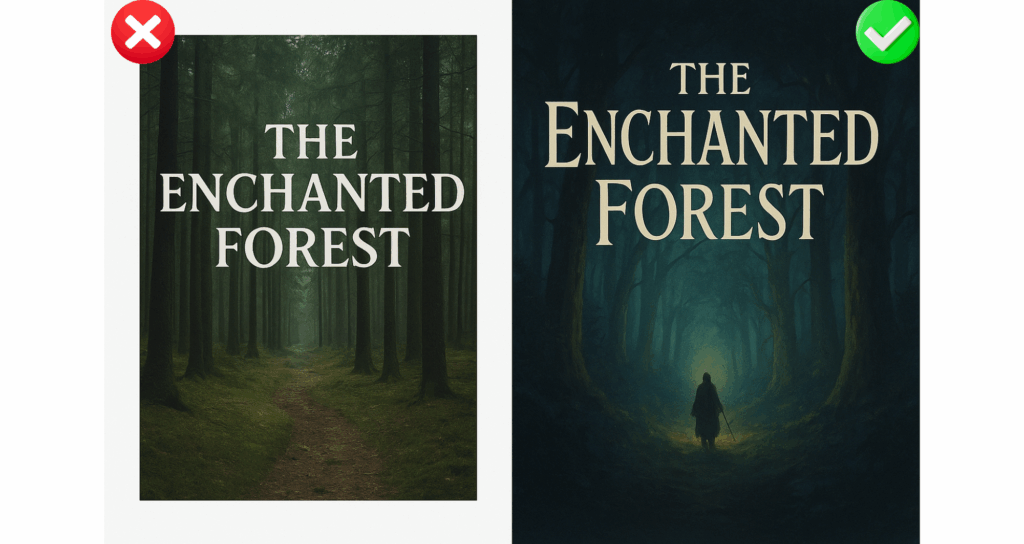
Discoverability is the real challenge in self-publishing. That includes keyword optimization, categories, cover design, and reader trust. This is why we emphasize cover design so heavily in posts like How to Choose the Perfect Book Cover. Readers make decisions in seconds, often before reading a single word.
Myth 5: Marketing requires a big budget
Marketing does not have to be expensive to be effective.
In our Budget-Friendly Marketing Ideas for New Authors post, we define budget friendly as under $50. Social media consistency, email list building, reader magnets, and content marketing can all be done affordably. Platforms like Fiverr and Upwork can also help you outsource small tasks without long-term commitments.
The key is strategy, not spending.
Myth 6: Social media followers equal book sales
Followers are NOT the same as readers!
A small, engaged audience who trusts you is far more valuable than thousands of passive followers. This is why we focus on content driven platforms and long-term visibility strategies, which we outline in How Authors Can Use Social Media to Sell More Books.
Social media works best when it supports your ecosystem rather than replaces it.
Myth 7: Self-published books are lower quality
This myth persists because low-quality books exist. Not because all self-published books are poor.
Self-published authors who invest in editing, design, and research often produce books that rival traditional releases. The difference is intention. Tools like Book Bolt help with interior formatting and low-content publishing. Print services like Printful support merchandise and brand expansion for authors building a larger platform.
Quality is a choice.
Myth 8: You have to do everything alone
Self-publishing does not mean isolated publishing.
Editors, designers, beta readers, virtual assistants, and marketers all play a role. Communities, freelancers, and publishing services exist to support authors at every stage. Knowing when to ask for help is part of becoming a professional.
Myth 9: If the first book fails, the journey is over
Very few authors succeed on their first release.
Self-publishing rewards consistency and learning. Each book improves your skills, data, and confidence. Many successful authors did not gain traction until their third or fifth title. The journey is cumulative.
If you want to understand how publishing fits into a sustainable workflow, revisit our self-publishing workflow and planning content here on TrailHawk Publishing.

Final Thoughts
Self-publishing is not a shortcut. It is a skill set.
When you separate myth from reality, the path becomes clearer and far more empowering. With the right tools, realistic expectations, and a willingness to learn, self-publishing can be both creatively fulfilling and financially sustainable.
For more transparent insights, guides, and publishing lessons, explore the full archive at trailhawkpublishing.com/blog and follow along as new resources are added.
Our Affiliate Links:
- Miblart – cover designs and other services
- Bookshop – curated book lists
- Scrivener – writing workflow
- Fiverr – find freelance talent
- Book Bolt – keyword search
- Publisher Rocket – keyword/category search
Our Referral Links:
- Upwork – more freelance talent
- Printful – print-on-demand merch
- Creative Fabrica – fonts and images
Join our community! Follow @TrailHawkPublishing for publishing tips and behind-the-scenes updates: