
Disclosure: If you click any of our affiliate links and make a purchase, we will earn a commission (at no extra cost to you).
At TrailHawk Publishing, we often compare the self-publishing journey to building a house. You can have the most beautiful blueprint in the world, but if you do not have a hammer, a saw, and a level, your structure will never stand. As an indie author, you are the general contractor of your career. This means you need a reliable set of tools to ensure your book is built to last and ready for the public eye.
We have spent years testing different platforms, software, and services to see what actually works for modern authors. We know that the sheer volume of choices can lead to decision paralysis, which is one of the 9 Common Myths About the Self-Publishing Journey. To help you clear the clutter, we have updated our comprehensive list of resources, categorized by each stage of the publishing lifecycle, including our favorite verified partners and affiliate tools.
 Category 1: Writing and Plotting Tools
Every great book begins with a solid foundation. While a simple word processor can get the job done, we find that specialized writing software can significantly improve your productivity and organization. These tools help us keep track of complex character arcs, world-building notes, and intricate plot twists.
- Scrivener: This is the gold standard for many professional authors. It allows us to break our manuscript into small, manageable scenes rather than one long, scrolling document. It also includes a research folder where we can store images, PDFs, and web links for easy reference.
- Plottr: If you find yourself getting lost in your own story, Plottr is a fantastic visual outlining tool. It allows us to see our plot points on a timeline, making it easy to spot pacing issues or dropped subplots before we even start writing.
- A Pen Name Strategy: Before you get too deep into your writing, we suggest deciding on your author identity. If you are considering an alternative name, please refer to our guide on How to Choose a Pen Name That Supports Your Author Brand.
Category 2: Editing and Quality Control
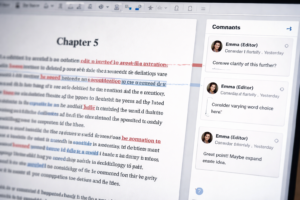
We cannot emphasize this enough: professional editing is the one area where you should never cut corners. A poorly edited book is a fast track to negative reviews and a damaged reputation. We believe that every manuscript needs at least three stages of review: developmental editing for the big picture, copyediting for the mechanics, and proofreading for the final polish.
- Upwork: When we need to hire specialized, long-term professionals, Upwork is a premier choice. It allows us to vet editors based on their specific niche and past client feedback. We suggest looking for editors who have a proven track record in your specific genre.
- Fiverr: For smaller tasks, such as a final “cold read” or a quick proofread of a short story, Fiverr can be a budget-friendly option. It is also a great place to find sensitivity readers who can provide feedback on diverse perspectives.
- Reedsy: This marketplace is excellent for finding high-caliber editors who have worked at major publishing houses. It is a fantastic resource for authors who want a “traditionally published” level of quality for their indie project.
- Automated Tools: While they do not replace a human, tools like ProWritingAid or Grammarly are essential for our first pass. They help us catch “sticky” sentences and repetitive phrasing before we spend money on a professional editor.
- Alpha and Beta Readers: We strongly suggest using a team of readers to test your story before it goes to a final proofreader. If you are unsure how to manage this, check out our guide on Alpha, Beta, and ARC Readers.
 Category 3: Specialized and Low-Content Publishing
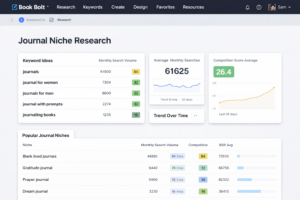
Not every author is writing a 100,000-word epic. Many indie publishers find great success in “low-content” or “no-content” books, such as journals, planners, and puzzle books. These require a different set of tools to research niches and generate interior layouts quickly.
- Book Bolt: If you are interested in the low-content market, Book Bolt is an all-in-one solution. It provides powerful keyword research specifically for KDP, as well as a design studio for creating interiors and covers for journals and activity books.
- Creative Fabrica: This is our favorite destination for fonts, graphics, and interior templates. Whether you need a specific font for your book cover or pre-made assets for a planner, their massive library of commercial-use resources is a lifesaver for indie publishers.
 Category 4: Design and Creative Services
Your cover is your most important marketing asset. In a digital storefront, it is the only chance you have to stop a reader from scrolling. We believe that your cover should not only look professional but also accurately represent the “promise” of your genre.
- Miblart: For high-end, custom cover designs that truly pop, we highly recommend Miblart. They specialize in genre-specific covers for both fiction and non-fiction, and their team is excellent at working with authors to bring a vision to life.
- Creative Fabrica: We use this resource again for unique design elements. If you are doing any of your own design work for social media or internal illustrations, their massive selection of graphics ensures you won’t look like every other author using the same stock assets.
- Fiverr: Beyond editing, we often use this platform for character sketches, social media trailers, and even map drawing to enhance our world-building.
Category 5: Marketing and Distribution Research
You can write the greatest book in the world, but it will not matter if no one can find it. Marketing is about visibility and data. We use specific tools to ensure our books are appearing in front of the right readers at the right time.
- Publisher Rocket: This is our favorite tool for Amazon research. It allows us to see exactly how much competitors are making and what keywords readers are actually typing into the search bar. We highly recommend using it to optimize your book’s metadata. If you need help understanding these metrics, see our post on How to Do Keyword Research for Your Book the Right Way.
- Bookshop.org: We love supporting independent bookstores. By setting up a shop here, you can curate lists of your favorite books and your own titles while ensuring a portion of the profits goes to local booksellers. It is a great way to build a professional “shelf” for your readers to browse.
- BookSirens: To build social proof, we suggest using BookSirens for managing your ARC (Advance Review Copy) team. It is an affordable way to find honest reviewers in your specific genre before your launch day.
Category 6: Merchandising and Branding
A professional author brand often extends beyond the pages of the book. Selling merchandise like t-shirts, mugs, or bookmarks is a fantastic way to engage with your superfans and create an additional stream of income.
- Printful: For “print on demand” merchandise, Printful is our top recommendation. You can upload your book cover or logo to their system, and they handle the printing and shipping only when a customer makes a purchase. This allows you to offer merchandise without ever having to hold inventory or worry about shipping logistics.
 Category 7: Formatting and Production
Once your manuscript is edited and your cover is designed, you must transform your file into a functional eBook and print file. This stage is where many authors run into technical trouble, especially regarding Digital Accessibility for Ebooks.
- Atticus: We are huge fans of Atticus. It is an all-in-one writing and formatting tool that works on both Mac and PC. It creates beautiful, professional interiors for both Kindle and print, and it automatically handles the technical backend to ensure your book is accessible.
- Vellum: If you are a Mac user, Vellum is a beloved choice for book formatting. It is known for its ease of use and the elegant aesthetics of its finished files.
- Bowker (MyIdentifiers): As we have discussed in our post on ISBNs Explained, owning your own ISBNs is essential for professional publishers. Bowker is the official source for ISBNs in the United States.
Building Your Own Toolbox
We know that this list is long, and we do not expect you to master every tool overnight. Our advice is to start with the essentials: a good writing program, a professional editor from a site like Upwork, and a reliable formatting tool. As your career grows, you can add more specialized resources like Printful or Book Bolt to your vault.
The most important thing to remember is that you do not have to do this alone. At TrailHawk Publishing, we are committed to providing you with the knowledge and resources you need to soar. If you are ever feeling lost, go back to the basics and focus on the quality of your craft. The tools are there to support your story, not replace it.
We hope this resource vault serves as a helpful roadmap for your next project. Happy writing, and we look forward to seeing your books on the shelves soon.

Our Affiliate Links:
- Miblart – cover designs and other services
- Bookshop – curated book lists
- Scrivener – writing workflow
- Fiverr – find freelance talent
- Book Bolt – keyword search
- Publisher Rocket – keyword/category search
Our Referral Links:
- Upwork – more freelance talent
- Printful – print-on-demand merch
- Creative Fabrica – fonts and images
Join our community! Follow @TrailHawkPublishing for publishing tips and behind-the-scenes updates: