
Disclosure: If you click any of our affiliate links and make a purchase, we will earn a commission (at no extra cost to you).
When we first start writing, we often focus solely on the craft of storytelling. We worry about character arcs, pacing, and dialogue. However, there comes a moment in every author’s journey when the focus must shift from the creative to the commercial. If you want to take full control of your career and maximize your earnings, you are no longer just an author; you are a publisher.
At TrailHawk Publishing, we believe that the “indie” in indie publishing stands for independence. Becoming an indie publisher means you are the CEO of your own small press. You are responsible for the quality, distribution, and marketing of your books. In this guide, we will walk you through the business aspect of starting your own publishing imprint and how to set yourself up for long-term success on platforms like Amazon KDP and beyond.
Shifting Your Mindset: Author vs. Publisher
The most significant hurdle for many writers is the mindset shift. An author writes the book, but a publisher sells the book. When you decide to become an indie publisher, you are choosing to wear two hats. We often tell our authors that while the creative “you” needs freedom to explore, the business “you” needs to be disciplined and data-driven.
Treating your work as a business from day one is the best way to avoid the 9 Common Myths About the Self-Publishing Journey. Many people believe that publishing is just uploading a file to Amazon. In reality, becoming a professional publisher involves legal preparation, financial planning, and brand building.
Choosing Your Business Structure
Before you hit the “publish” button, you need to decide how you want to exist in the eyes of the law. Most indie publishers start in one of two ways: as a Sole Proprietorship or as a Limited Liability Company (LLC).
If you publish under your own name and do not file any special paperwork, you are likely a sole proprietor. This is the simplest method, but it does not provide any separation between your personal assets and your business liabilities. We generally recommend that authors who are serious about their careers look into forming an LLC. An LLC provides a layer of protection and can offer tax advantages as your income grows.
Regardless of which structure you choose, we suggest opening a dedicated business bank account. Mixing your grocery money with your book royalties makes for a nightmare during tax season. Keeping your publishing finances separate allows you to track your Return on Investment (ROI) more accurately.

Creating Your Imprint and Brand
Your “imprint” is the name of your publishing company. This is the name that will appear on Amazon, Barnes & Noble, and IngramSpark under the “Publisher” field. Choosing a professional-sounding imprint name adds a level of credibility to your work. It signals to readers and libraries that the book has been produced to a high standard.
When choosing a name, make sure it reflects the brand you want to build. Does it sound like a major house, or does it feel boutique and niche? Once you have a name, you should also consider your visual identity. This includes a logo that can fit on the spine of your books. If you are also considering using a pseudonym for your writing, you should check out our guide on How to Choose a Pen Name That Supports Your Author Brand. Your imprint and your pen name should work together to tell a cohesive story to your audience.
 The Technical Foundation: ISBNs and Accounts
One of the most important steps in becoming an indie publisher is owning your own infrastructure. While platforms like Amazon KDP offer free ISBNs, we strongly advise against using them if you want to be a true publisher. When you use a free ISBN, the platform is listed as the publisher of record.
To maintain full control, you should purchase your own ISBNs from Bowker (in the United States) or your country’s local agency. This ensures that you are the owner of the metadata for your book. For a deep dive into why this matters, read our post on ISBNs Explained: What They Are and Why Every Author Should Care.
After securing your ISBNs, you will need to set up your accounts on distribution platforms. We recommend starting with Amazon KDP for ebooks and paperbacks. However, a professional publisher does not stop there. You should also look into IngramSpark for expanded distribution to bookstores and libraries, and Draft2Digital for reaching other ebook retailers like Apple Books and Kobo.
Understanding the Costs of Doing Business
Becoming an indie publisher is an investment. While it is possible to publish a book for zero dollars, we do not recommend it if you want to compete in today’s market. You are competing with traditional publishing houses that have massive budgets, so your quality must match theirs.
Here is a breakdown of the potential costs we see for a professional launch:
- Editing: This is your most significant expense. You will likely need a developmental edit, a copyedit, and a final proofread. Expect to spend anywhere from $500 to $2,500 depending on the length of your manuscript. We recommend finding high-quality editors through Reedsy, Upwork, or Fiverr.
- Cover Design: A professional cover is your best marketing tool. A custom, genre-specific cover can cost between $300 and $800.
- Formatting: You need your book to look professional on both digital and print pages. While you can hire this out, we recommend investing in tools like Atticus, Scrivener, or Vellum, which allow you to format unlimited books for a one-time or subscription fee.
- ISBNs: A single ISBN is around $125, but a pack of ten is $295. As a publisher, buying in bulk is always the smarter financial move.
- Marketing: You should set aside a budget for initial ads and review services. Even $5 or $10 a day on Amazon Ads can help your book gain traction.
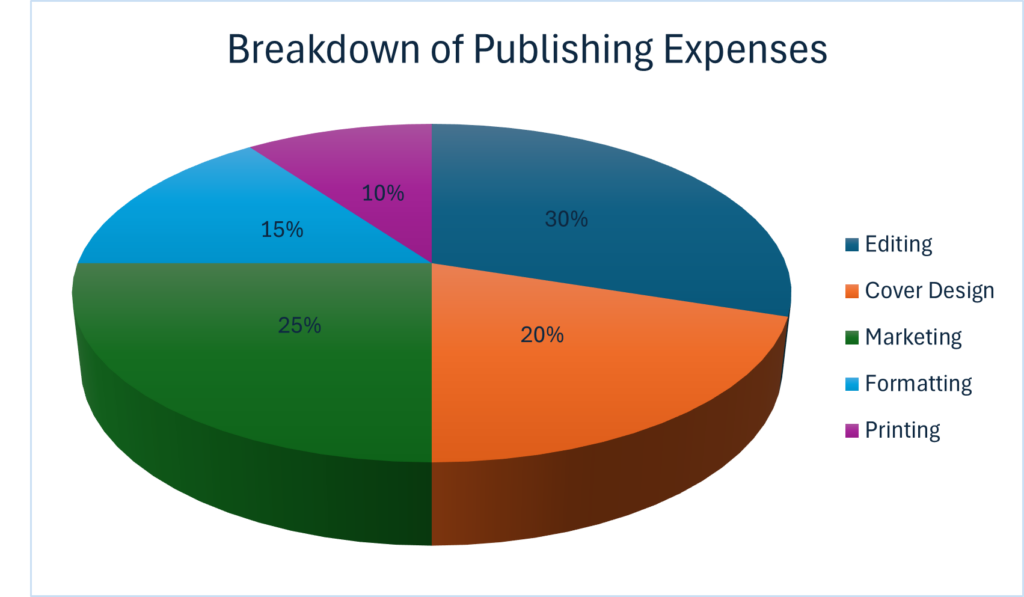
A sample publishing budget breakdown
Launching and Marketing Your Catalog
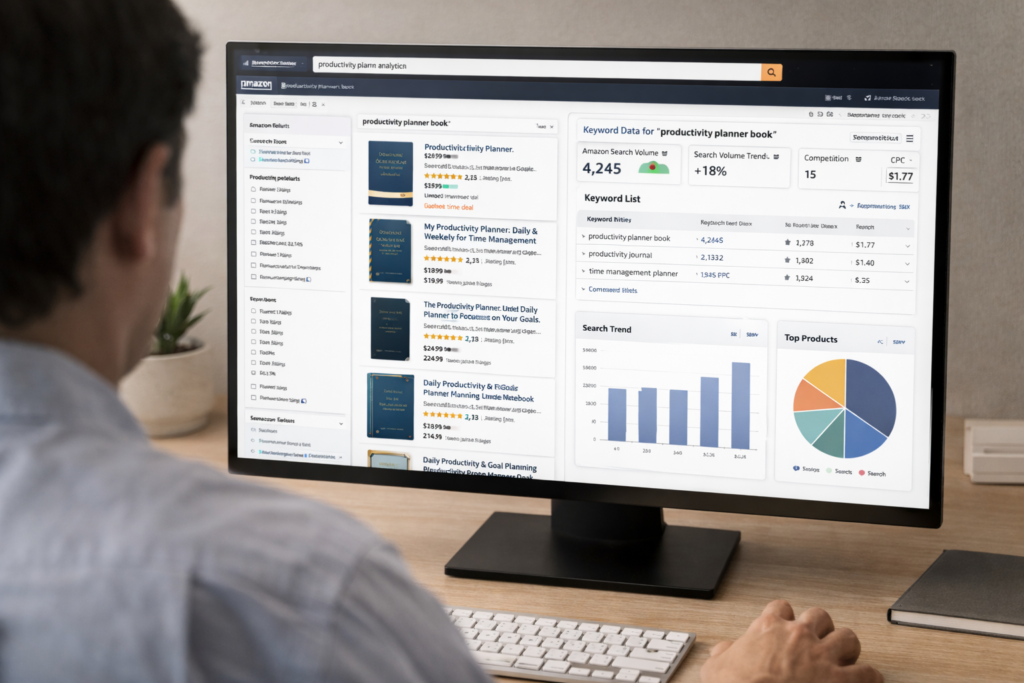
Once the business is set up and the book is ready, the real work of the publisher begins. You must manage your launch with the same precision as a project manager. This includes setting up your pre-order, organizing an ARC team, and conducting keyword research.
Keyword research is the secret sauce that helps readers find your book without you having to scream into the void of social media. We use professional tools to see exactly what readers are typing into search bars. If you want to master this skill, we recommend reading How to Do Keyword Research for Your Book the Right Way. For the best results, we suggest using Publisher Rocket to get real-time data from Amazon.
Marketing is not just about the launch day; it is about building a backlist. As an indie publisher, your goal is to create a catalog of books that sell year after year. Every new book you release should help sell your older titles. This is how you build a sustainable, long-term business.
The Rewards of Independence
The road to becoming an indie publisher is certainly more demanding than simply being a hobbyist writer. It requires you to learn about tax laws, metadata, distribution logistics, and marketing strategies. However, the rewards are well worth the effort.
As an indie publisher, you keep a significantly higher percentage of your royalties. You own all your rights. You have the final say on every creative and business decision. Most importantly, you are building an asset that belongs entirely to you.
We encourage you to take the first step today. Start by looking at your current work through the lens of a business owner. Ask yourself if your current process is professional or if there are areas where you can improve your standards. We have provided a roadmap in our Self-Publishing Guide 101 to help you navigate these early stages.
Running a publishing house is a marathon, not a sprint. We are here to help you every step of the way as you build your empire, one book at a time.
Welcome to the world of indie publishing; we can’t wait to see what you create!
Our Affiliate Links:
- Miblart – cover designs and other services
- Bookshop – curated book lists
- Scrivener – writing workflow
- Fiverr – find freelance talent
- Book Bolt – keyword search
- Publisher Rocket – keyword/category search
Our Referral Links:
- Upwork – more freelance talent
- Printful – print-on-demand merch
- Creative Fabrica – fonts and images
Join our community! Follow @TrailHawkPublishing for publishing tips and behind-the-scenes updates: